Air Conditioning Maintenance and System Reliability
Air conditioning has a cruel sense of humor. It behaves politely in April, hums along through mild afternoons, then waits until the hottest Friday of the year to cough, wheeze, and make a noise that sounds like a fork in a garbage disposal. The thermostat says 72. The living room says “abandon hope.” Somewhere, an air conditioning contractor is looking at a fully booked schedule and wondering why everyone’s system chose the same day to develop a personality.
That is the real reason air conditioning maintenance matters. Not because equipment enjoys spa days, although some systems do seem to perk up after a proper cleaning and check. Maintenance matters because reliability is built before the emergency. Air conditioning repair is necessary when something has failed, but maintenance is the quieter craft of reducing the odds that the failure arrives at the worst possible moment, wearing muddy boots and demanding overtime.
A good HVAC business sits at the intersection of several trades. Heating, ventilation, and air conditioning work often overlaps with plumbing and electrical tasks associated with heating and cooling equipment. Depending on the job, a technician may be thinking like an air conditioning repair service one moment, a heating contractor the next, and coordinating with an electrician when the equipment or installation requires it. That is not mission creep. It is the nature of mechanical systems in real buildings. Comfort equipment does not live alone in a glass case. It is wired, drained, charged, controlled, ducted, mounted, and expected to perform while dust, heat, moisture, and human optimism all take turns interfering.
Reliability is not luck, though luck gets too much credit
When an air conditioner lasts through a brutal season, people often call it a good unit. Sometimes they are right. Equipment quality matters. But system reliability is rarely just about the box outside or the equipment in the attic, closet, basement, or mechanical room. Reliability comes from the whole chain: design, installation, refrigerant charge, sizing, maintenance, repair judgment, and the conditions the system faces year after year.
One of the most overlooked facts about cooling systems is that proper installation is part of reliability, not merely the opening ceremony. Correct equipment sizing and proper refrigerant charging are not technical trivia. They influence energy consumption and the likelihood of failure. A system that is not sized correctly can have a harder time doing its job. A system that is not charged properly can run less efficiently and face more stress. The customer sees vents and a thermostat. The technician sees a system of linked decisions, some made years earlier, still sending invoices in the form of noise, discomfort, or breakdowns.
That is why a good air conditioning tune-up is not just a ceremonial panel removal followed by a sticker on the unit. It is a chance to inspect the system as a working assembly. Does it start properly? Does it run steadily? Does it appear to be moving heat the way it should? Are there signs that an earlier repair solved the symptom but not the cause? Is the equipment being asked to do a job it was never properly set up to do?
The best technicians I have known do not treat maintenance like a script. They treat it like an interview with a machine that only speaks through pressure, temperature, sound, vibration, water, air movement, and the occasional dramatic burning smell. Machines are not chatty, but they are rarely silent.
The difference between maintenance and repair, in plain English
Air conditioning maintenance is planned attention. Air conditioning repair is corrective action after something has gone wrong or started going wrong clearly enough that comfort, safety, or operation is affected. The two overlap, but they are not the same.
Maintenance asks, “What condition is the system in, and what is likely to cause trouble?” Repair asks, “What failed, what caused it, and what must be corrected?” A tune-up may uncover a repair need. A repair visit may reveal that lack of maintenance helped create the failure. This is not finger-pointing. It is cause and effect, wearing a tool belt.
A homeowner might call for air conditioning repair because the system is not cooling. The technician may find an issue related to the cooling equipment itself, or something connected to the electrical side of the system, or a drainage concern, or an installation detail that has been irritating the equipment for years. That is why the category of HVAC work is broad in practice. Contractors who install and maintain heating, ventilation, and air conditioning equipment may also deal with duct cleaning and plumbing or electrical work tied to heating and cooling equipment. Some companies also offer plumbing leak repair, drain cleaning, rooter service, water heater repair, water heater installation, plumbing repiping, water softener installation, gas installation service, furnace repair service, heat pump installation, septic system service, or lighting contractor work. Not every contractor does every one of those services, and not every technician is licensed for every task, but the overlap in buildings is real.
A cooling system can be brought down by a component failure, yes. It can also be compromised by water where water should not be, wiring that needs qualified attention, drainage that has turned into a swampy little science fair, or work from another trade that changed conditions around the equipment. Mechanical rooms are ecosystems. Occasionally, they are also storage closets with delusions of grandeur.
The air conditioner as part of a larger house system
It is tempting to think of an air conditioner as one appliance, the way a toaster is one appliance. Press button, receive toast. But air conditioning equipment is connected to airflow, refrigerant circuits, electrical controls, condensate management, thermostats, ducts, and sometimes heating equipment that shares components or space. In many homes and buildings, the cooling system is part of an HVAC arrangement that also includes furnace repair concerns, heating contractor responsibilities, or heat pump installation decisions.
This matters because system reliability depends on all the pieces behaving together. A cooling unit may be mechanically capable, yet its performance can still be dragged down by poor installation conditions or neglected supporting parts. Proper refrigerant charging is one example. Correct sizing is another. These are not decorative details, like choosing a nicer thermostat font. They are core to performance and failure risk.
The same logic applies when replacing equipment. A new air conditioner installed into a flawed setup can inherit old problems with suspicious speed. The customer expected a fresh start. The system received a family curse. Good contractors know to look beyond the shiny cabinet. They think about sizing, installation quality, charging, and whether the equipment has a fair chance to operate reliably. That is where professional judgment separates a true air conditioning contractor from someone who simply knows how to move heavy boxes and nod confidently.
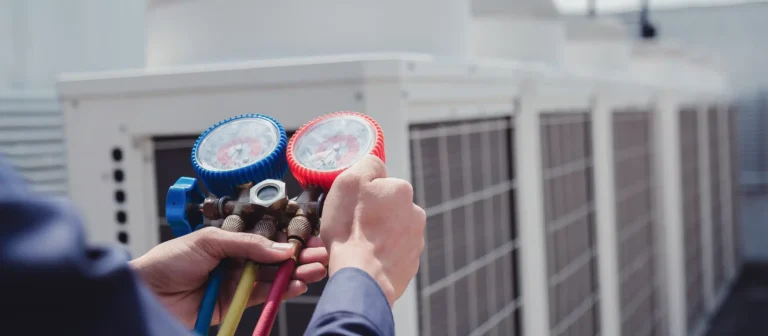
What a serious tune-up is really trying to accomplish
A serious air conditioning tune-up has three purposes. It checks current operation, catches developing problems, and protects the conditions that help the equipment run as designed. That may sound tidy, but real service work is full of judgment calls.
Some findings are clear. If a system does not start, does not cool, or shows an obvious defect, the path turns into repair. Other findings require experience. A technician may see signs that a system is working but not happily. The question becomes whether the condition is normal aging, a developing failure, an installation issue, or a symptom of a related problem elsewhere. This is where customers sometimes want a simple answer and technicians have to resist the urge to make one up.
Air conditioning maintenance is not fortune-telling. No honest contractor can guarantee that a system checked on Tuesday will never fail on Saturday. Parts can fail. Conditions can change. Electrical and mechanical equipment has limits. What maintenance can do is reduce avoidable risk, improve the chance of steady performance, and reveal issues while there is still time to make calm decisions. Calm decisions are cheaper than panic decisions, if only because panic has terrible taste in scheduling.
A useful maintenance visit often considers:
- Whether the system starts, runs, and shuts down as expected.
- Whether installation-related factors, including sizing and refrigerant charge, appear to support reliable operation.
- Whether there are signs of wear, abnormal operation, or conditions likely to increase failure risk.
- Whether related components, drainage, controls, or electrical connections require further qualified attention.
- Whether the owner understands what was checked, what was found, and what decisions can reasonably wait.
That list is short because maintenance should not be reduced to a scavenger hunt. The real value is not in checking boxes. It is in understanding what the boxes mean.
Refrigerant charge: the invisible detail customers pay for twice
Refrigerant is one of those topics that makes customers’ eyes glaze over until the system stops cooling. Then it becomes fascinating, usually at 4:42 p.m. On a day when the house has reached the temperature of soup.
Proper refrigerant charging matters. Cooling equipment and heat pumps depend on the right conditions to move heat. When charging is not correct, energy use can rise and failure risk can increase. The customer may notice poor comfort, longer operation, or recurring service needs. The technician sees something more specific: a system operating outside the conditions it should have been given.
This is also where maintenance and installation quality meet. If a system was not charged properly during installation, maintenance may be the first time the issue is identified, assuming the technician performs a careful evaluation and the operating conditions allow meaningful assessment. If a system has developed a refrigerant-related problem later, air conditioning repair may be needed. Either way, the important point is that charge is not a “top it off and see what happens” detail in professional work. It is tied to performance, efficiency, and reliability.
There is a regulatory side as well. Air conditioners and other refrigeration equipment fall under rules that define these systems as appliances for refrigerant purposes, and technicians involved in maintenance, service, repair, or installation may be covered by those requirements. The practical takeaway is simple: refrigerant work belongs with qualified people who understand both the equipment and the obligations attached to servicing it. The can-do spirit is admirable in many areas of life. Around refrigerant circuits, it should bring Plumber credentials.
Sizing: where bigger can be dumber
The phrase “bigger is better” has done more damage to comfort systems than a raccoon in flex duct. Proper equipment sizing is a core part of proper HVAC installation. A system should be selected to match the building’s needs, not the owner’s anxiety level. Oversizing or undersizing can create performance problems, and performance problems tend to become reliability complaints.
This is uncomfortable for some buyers because sizing requires trust. You cannot judge it by admiring the cabinet. Two outdoor units may look equally impressive while being completely different matches for a building. A good contractor takes sizing seriously because it affects more than first-day cooling. It affects how the system runs, how it handles demand, and how much strain it may experience over time.
The same thinking applies to heat pump installation. Heat pumps provide heating and cooling functions, so the selection and setup deserve careful attention. A heat pump that is poorly matched or poorly installed is not merely an imperfect purchase. It is a long-term relationship with avoidable irritation. Nobody needs that. Appliances already have enough emotional range.
Maintenance is cheaper than confusion
A neglected system does not always fail dramatically. Sometimes it just becomes mysterious. Rooms feel uneven. The system runs longer. The owner adjusts the thermostat, then adjusts it again, then begins developing theories involving sun angles, attic ghosts, and whether the neighbor’s new fence changed the wind.
Maintenance gives structure to the mystery. Instead of guessing, a qualified air conditioning repair service can evaluate the equipment and the related conditions. Maybe the system needs cleaning or adjustment. Maybe a repair is developing. Maybe the issue points back to installation. Maybe the cooling equipment is not the only problem in the building. Good service narrows the field.
The danger of skipping maintenance is not only that parts may wear or fail unnoticed. It is that small observations are lost. A technician who sees a system regularly can compare current condition with prior condition. Has operation changed? Is a recurring issue really recurring, or is it a new symptom wearing the old symptom’s hat? Did a previous repair hold? Has another contractor’s work nearby affected the equipment? Service history is not glamorous, but neither is flossing, and dentists seem annoyingly correct about that too.
Where plumbing and HVAC keep bumping elbows
Plumbing and HVAC trades are often grouped for good reason. Both live in the practical world of pipes, drains, equipment, mechanical rooms, access problems, and customers who swear the noise “just started,” even when the unit has clearly been auditioning for a percussion ensemble since spring.
Some contractors offer plumbing services alongside heating and cooling, including plumbing leak repair, drain cleaning, rooter service, hydrojetting, water heater repair, water heater installation, plumbing repiping, and water softener installation. That does not mean every air conditioning problem is secretly a plumbing problem. It means buildings are interconnected. Water management matters around many mechanical systems. Drainage issues can create comfort complaints, property concerns, and service calls that do not fit neatly into one trade label.
A company that understands both plumbing and HVAC may be better positioned to recognize when a problem crosses boundaries. The same is true with electrical work. HVAC equipment depends on electrical power and controls, and some work belongs with an electrician or a contractor qualified for that scope. The reliable system is often the one where trades do not pretend the others do not exist.
There is a humility to good mechanical work. The best plumber knows when the electrical side needs attention. The best electrician respects that equipment operation is not just wires and breakers. The best heating contractor knows that cooling reliability may depend on installation, maintenance, refrigerant handling, airflow, controls, and sometimes a drain line that has decided to become modern art.
The uncomfortable truth about emergency repairs
Emergency air conditioning repair has a special smell: hot house, nervous dog, damp towel over someone’s shoulders, and a homeowner standing near the thermostat as if moral support might help. By the time a system is fully down, every option feels worse. Repair may be urgent. Replacement may be discussed under pressure. Scheduling may be tight. Parts may not be immediately available. The customer wants certainty. The technician wants diagnostic time and perhaps a cold drink.
Maintenance cannot eliminate emergency repairs, but it can reduce the number that are caused by neglect, poor setup, or slowly developing faults that no one noticed. More importantly, it can move decisions out of crisis mode. If a tune-up reveals that a system is aging, struggling, improperly set up, or likely to need significant repair, the owner can plan. Planning is not as exciting as panic, but it is far better for budgeting and blood pressure.
There are cases where repair makes sense. There are cases where replacement deserves a serious conversation. There are cases where the immediate goal is to restore operation safely and discuss longer-term options after everyone has stopped melting. A trustworthy contractor explains the difference. They do not turn every service call into a sales ambush, and they do not keep patching a failing system without telling the owner that the pattern matters.
A maintenance visit should end with clarity, not theater
One of the easiest ways to spot weak service is the foggy explanation. The technician emerges, says several technical nouns in a row, points vaguely at the outdoor unit, and presents a choice between “do nothing” and “replace everything including the mailbox.” That is not professional communication. That is a hostage note with gauges.
A good air conditioning maintenance visit should leave the owner with clear information. The contractor should explain what was inspected, what was found, whether air conditioning repair is recommended, and whether any related trade work may be needed. If the system appears to have installation concerns, such as sizing or charging issues, that should be explained carefully. If the condition cannot be fully evaluated without additional diagnostic work, that should also be clear.
Customers do not need to become technicians. They do need enough plain-language information to make sensible decisions. “The system is fine” may be acceptable if it is true, but “fine” is not a maintenance report. “It is running, but we found conditions that may increase failure risk” is more useful. “The refrigerant charge appears to need professional evaluation” is more useful still, especially because charging affects energy use and reliability. Good communication turns technical findings into decisions.
Here is a compact way to judge whether the service conversation is doing its job:
- You understand what condition the system is in today.
- You understand what, if anything, needs repair now.
- You understand what could become a reliability concern later.
- You understand which recommendations are urgent and which can be planned.
- You understand whether the concern is cooling equipment, electrical, plumbing-related, installation-related, or a combination.
If the explanation cannot survive plain English, it may not be fully baked.
The role of credentials, scope, and the right contractor
Air conditioning work is a recognized specialty, and HVAC contractors focus on installing and maintaining heating, ventilation, and air conditioning equipment. Air conditioning service and repair is also recognized as its own service category. That should matter to customers. Cooling systems are not decorative furniture. They are mechanical and electrical equipment involving refrigerant, controls, installation standards, and safety considerations.
The right contractor for maintenance is not merely the person who can arrive fastest, though during a heat wave speed can feel like a religious experience. The right contractor understands the system as a whole and knows the limits of their scope. If a job requires electrical expertise, gas installation service, plumbing repair, or heating knowledge, the contractor should either have the qualified personnel or coordinate appropriately. A business that offers multiple trades may handle more of the picture in-house, but the principle is the same: the work should match the qualification.
This is especially important with systems that connect heating and cooling. A furnace repair service may interact with equipment that shares airflow or controls with the air conditioner. A heat pump installation brings heating and cooling considerations together in one system. A water heater installation or gas-related job may share space with HVAC equipment. A lighting contractor or electrician may affect electrical infrastructure near mechanical equipment. Buildings do not care about your neat categories. They prefer chaos with junction boxes.
Reliability has a memory
Mechanical systems remember how they were treated. Not emotionally, thankfully. If air conditioners could hold grudges, half of them would be writing memoirs. But they do carry the consequences of installation decisions, maintenance habits, prior repairs, environmental conditions, and related work around them.
A system that received proper installation, including correct sizing and refrigerant charging, starts with an advantage. A system maintained by qualified technicians keeps more of that advantage over time. A system repaired with attention to causes, not just symptoms, has a better chance of staying reliable. Each visit either adds to the record or muddies it.
That is why cheap service can become expensive. If a tune-up is too rushed to observe meaningful conditions, it may miss the point. If a repair restores cooling but ignores why the failure occurred, the problem may return. If installation focuses only on getting equipment running rather than getting it running correctly, the customer may pay for that shortcut through higher energy use, lower reliability, or repeat service calls.
Professional HVAC work is not magic. It is disciplined attention to details that customers usually cannot see. The irony is that when it is done well, nobody thinks about it. The house is comfortable. The system cycles along. The owner sleeps. The contractor gets no parade. That is the bargain. Reliability is mostly invisible until it disappears.
When maintenance reveals replacement is the sensible path
Nobody enjoys hearing that an air conditioner may be nearing the end of its practical life. It is a bit like being told your roof has “character.” Still, maintenance can reveal when repair is becoming a pattern rather than a solution. The decision is not always obvious, and a good contractor should avoid melodrama. A system does not need replacement just because it has one repair need. At the same time, repeated failures, poor performance, installation limitations, or significant reliability concerns may justify discussing new equipment.
If replacement is on the table, the conversation should return to fundamentals. What size equipment is appropriate? How will installation quality be protected? How will refrigerant charging be handled? Are there related heating, electrical, plumbing, or drainage issues that should be addressed at the same time? Is a heat pump installation worth considering, depending on the building and comfort goals? These questions matter because replacement is not just buying a machine. It is resetting the conditions for the next long stretch of operation.
A rushed replacement can create the next decade’s maintenance headaches. A careful replacement can improve the odds of reliable service. The difference is often hidden in measurements, setup, and workmanship rather than the brand badge on the cabinet. Brand names may get the showroom lighting. Installation quality does the heavy lifting.
The owner’s part in reliability
Owners do not need to diagnose refrigerant problems or perform technical service. Please do not take apart equipment because a stranger on the internet looked confident while holding a screwdriver. But owners do play a role in reliability by paying attention and scheduling qualified maintenance before the system is gasping.
The most useful thing an owner can do is notice changes. Does the system sound different? Does it run differently? Are comfort problems new or worsening? Has there been recent work in the home, such as electrical, plumbing, duct, heating, https://www.waze.com/live-map/directions/us/ca/orange/service-lion-plumbing-and-rooter?to=place.ChIJQU4LBWHV3IARtnABtyykSA4 or remodeling work, that might have affected the system? Has a drain issue appeared near mechanical equipment? These observations help technicians. A vague “it does not work right” is common and understandable. “It started after the last heavy cooling week, and the sound is coming from the indoor equipment” is better. Technicians like clues. They are less fond of riddles.
Owners should also keep perspective. Maintenance is not a warranty against all future inconvenience. It is risk management. It is the mechanical equivalent of changing oil, checking tires, and not waiting for smoke to decide the car wants attention. The fact that maintenance cannot prevent every failure does not make it optional. Seat belts do not prevent every injury either, but sensible people still buckle them.
The quiet payoff
Air conditioning maintenance and system reliability are not glamorous topics, unless your hobbies include amp draws, refrigerant circuits, and judging people’s filter access choices. Yet they shape daily comfort more than most building features. A fancy kitchen is lovely. It is less lovely when everyone is sweating into the backsplash.
Reliable cooling comes from competent contracting, proper installation, thoughtful maintenance, and honest repair. It comes from treating the air conditioner as part of a real building, not as an isolated appliance. It comes from respecting the overlap between HVAC, plumbing, electrical, heating, and related trades without blurring the need for qualified work. It comes from understanding that correct sizing and refrigerant charging are not extras. They are part of doing the job properly.
The best air conditioning maintenance does not announce itself with drama. It prevents some drama, explains the rest, and gives owners enough information to make steady decisions. That may not sound witty or exciting, but on the first scorching day of summer, a boringly reliable cooling system feels like luxury. The unit starts, the air cools, the house settles, and nobody has to stand in front of the thermostat bargaining with it like a tiny plastic oracle.
That is the point. Maintenance is not about pampering equipment. It is about making comfort less fragile. And if a well-maintained system can deny one emergency breakdown its grand entrance, that is a small act of civilization.
Name: Service Lion Plumbing Heating Air Electric
Address: 521 W Briardale Ave, Orange, CA 92865, United States
Phone: (657) 567-7305
Website: https://callservicelion.com/
Email: [email protected]
Hours:
Monday: Open 24 hours
Tuesday: Open 24 hours
Wednesday: Open 24 hours
Thursday: Open 24 hours
Friday: Open 24 hours
Saturday: Open 24 hours
Sunday: Open 24 hours
Open-location code: R48R+WV Orange, California, USA
Map/listing URL:
https://www.google.com/maps/search/?api=1&query=Google&query_place_id=ChIJQU4LBWHV3IARtnABtyykSA4
Google Map:
Socials:
https://www.facebook.com/ServiceLionCA/
https://www.youtube.com/channel/UCR_L35QzsRTxYZtX8PxJvPw
Local Service Information
Service Lion Plumbing Heating Air Electric provides plumbing, drain, heating, air conditioning, and electrical services from its Orange, California location.The company serves homeowners and properties throughout Orange and communities across Orange County and surrounding areas.
Available services include plumbing repairs, water heater work, drain and sewer services, heating and cooling service, electrical repairs, panels, lighting, outlets, and related home-system work.
Service is available for residential properties as well as light commercial needs described within the company's local service-area information.
The company's website emphasizes locally operated service, coordinated home-system support, and practical scheduling for plumbing, HVAC, and electrical needs.
The matching public business listing shows the Orange location as open 24 hours a day, seven days a week.
For service information or scheduling, call (657) 567-7305 or visit https://callservicelion.com/.
The public map listing identifies the business at 521 W Briardale Ave, Orange, CA 92865 and can be used for location and direction information.
Popular Questions About Service Lion Plumbing Heating Air Electric
What services does Service Lion Plumbing Heating Air Electric provide?
The company provides plumbing, drain and sewer, heating, air conditioning, and electrical services. Its published services include plumbing repair, water heaters, drain clearing, sewer work, HVAC repair and installation, electrical repairs, panels, circuit breakers, lighting, outlets, and related services.
Where is Service Lion Plumbing Heating Air Electric located?
The matching business location is 521 W Briardale Ave, Orange, CA 92865, United States.
What areas does Service Lion Plumbing Heating Air Electric serve?
The company serves Orange County and surrounding communities. Its published service-area information includes Orange, Anaheim, Brea, Yorba Linda, Fullerton, Huntington Beach, Newport Beach, Costa Mesa, Irvine, Lake Forest, and additional nearby cities.
Is Service Lion Plumbing Heating Air Electric open 24 hours?
The matching public business listing shows the location as open 24 hours on Monday through Sunday.
Does Service Lion Plumbing Heating Air Electric work on drains and sewer lines?
Yes. Published services include drain clearing, rooter service, camera inspection, hydro jetting, sewer line repair and installation, water line work, slab leak detection, and trenchless sewer line repair.
Does Service Lion Plumbing Heating Air Electric provide heating and air conditioning service?
Yes. Its published HVAC services include air conditioning repair and installation, heating service, furnace work, heat pumps, air ducts, indoor air quality assessments, and thermostat installation.
Does Service Lion Plumbing Heating Air Electric provide electrical service?
Yes. Published electrical services include repairs and installations, electrical panels, circuit breakers, safety inspections, lighting, outlets and switches, surge protection, generators, and EV charging equipment installation.
How can I contact Service Lion Plumbing Heating Air Electric?
Call (657) 567-7305.
Email: [email protected]
Website: https://callservicelion.com/
Facebook: https://www.facebook.com/ServiceLionCA/
Landmarks Near Orange, California
Old Towne Orange Historic District
A central historic district and useful geographic reference point for the Orange community.
Plaza Park
A well-known public gathering point in the center of Old Towne Orange.
Orange Public Library & History Center
A civic landmark serving residents near central Orange.
Hart Park
A major public park and recreation area south of central Orange.
Eisenhower Park
A public park serving neighborhoods in northern Orange.
Santiago Oaks Regional Park
A regional recreation and open-space landmark on the eastern side of Orange.
Irvine Regional Park
A large regional park and recognizable reference point east of the city.
Orange Park Acres
A distinctive residential community and service-area reference point in eastern Orange.
El Modena
An established Orange neighborhood that provides a practical local coverage reference.
Glassell Street
One of the city's principal north-south streets and a useful route through central Orange.
Lincoln Avenue
A major east-west roadway serving northern Orange and nearby communities.
State Route 55
A primary regional freeway connecting Orange with other parts of Orange County.