Air Conditioning Tune-Up Checklist for Homeowners
The first hot day of the year has a special talent for exposing every lazy decision made in March. You tap the thermostat down a few degrees, wait for that familiar hum, and instead get warm air, a strange rattle, or silence so complete it feels personal. Somewhere in the house, someone says, “Didn’t we mean to get the AC checked?”
Yes. Yes, you did.
An air conditioning tune-up is one of those household tasks that sounds optional until it is suddenly very much not optional. It sits in the same mental drawer as cleaning dryer vents, flushing the water heater, and pretending the garage is “almost organized.” The difference is that a neglected cooling system can punish you with high utility bills, weak airflow, water leaks, short cycling, electrical trouble, and the deeply undignified experience of sleeping under a ceiling fan like a rotisserie chicken.
I have seen air conditioners fail for dramatic reasons, but more often the culprit is boring. A clogged filter. A dirty coil. A weak capacitor. A condensate drain full of algae that looks like it belongs in a swamp documentary. The good news is that homeowners can spot many early warning signs, handle a few simple maintenance tasks, and know when to call an air conditioning contractor before the repair bill grows teeth.
This checklist is built for real homes, real schedules, and real equipment. Not a fantasy mechanical room with perfect lighting and labeled everything. If your outdoor unit is half-swallowed by shrubs, your filter slot is in a hallway ceiling, and your thermostat still has fingerprints from 2009, you are in the right place.
The tune-up mindset: prevent drama, not just breakdowns
A proper air conditioning tune-up is not just a quick glance at the thermostat and a ceremonial hose-down of the outdoor unit. Done well, it checks airflow, refrigerant performance, electrical components, condensate drainage, thermostat operation, coil condition, motor function, and overall system safety. That sounds like a lot because it is. Your cooling system is not one appliance. It is a small ecosystem with electricity, refrigerant, air movement, water drainage, controls, and sometimes heat pump operation all depending on each other.
When one part struggles, another part usually pays for it. A dirty filter reduces airflow, which can cause the evaporator coil to get too cold, which can lead to icing, which can send liquid refrigerant where it does not belong, which can damage a compressor. That is the air conditioning version of knocking over one shampoo bottle and somehow losing the entire shower caddy.
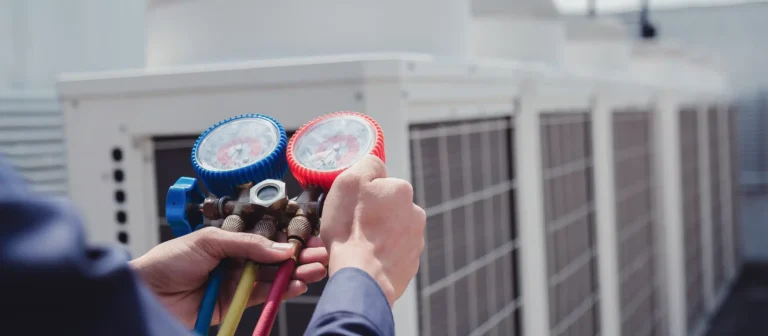
Professional air conditioning maintenance also gives you a baseline. A technician can measure temperature split, amperage draw, capacitor strength, static pressure, refrigerant pressures, and condensate flow. Those readings help separate “still working” from “working, but wearing tap shoes on the edge of a cliff.”
Homeowners do not need to own gauges or meters to be useful here. Your job is to keep the obvious stuff from becoming expensive and to notice when the system is behaving differently. A homeowner with a good ear and a clean filter has prevented many emergency calls.
Your homeowner AC tune-up checklist
Use this table as your seasonal guide. It separates tasks most homeowners can reasonably handle from work that belongs with a licensed air conditioning repair service. If you are not comfortable around equipment, electricity, ladders, or anything that makes you mutter “that seems spicy,” skip the heroics and call a pro.
| Tune-up task | Homeowner or pro? | What you are looking for | |---|---|---| | Replace or clean the air filter | Homeowner | Good airflow, less dust, no gray carpet growing on the filter | | Clear debris around the outdoor condenser | Homeowner | At least about 2 feet of breathing room around the unit | | Check thermostat operation | Homeowner | Accurate settings, fresh batteries if needed, normal system response | | Inspect condensate drain area | Homeowner or pro | No standing water, ceiling stains, musty odor, or algae backup | | Test electrical components, refrigerant, coils, motors, and safety controls | Pro | Proper readings, safe operation, no early signs of failure |
That table looks simple, and that is the point. Most homeowners do not need a 47-step ritual involving specialty tools and a suspicious amount of confidence. They need a practical routine they will actually do, preferably before the first heat wave turns every air conditioning repair company into a triage center.
Start with the filter, the cheapest part with the biggest attitude
If your air conditioner had a bouncer, it would be the air filter. Its job is to keep dust, pet hair, lint, and mystery fuzz from coating the blower wheel and evaporator coil. When the filter gets clogged, the system cannot breathe. Airflow drops. Comfort suffers. The blower works harder. The evaporator coil can freeze. Your energy bill creeps upward while your living room remains stubbornly lukewarm.
Most basic 1-inch filters need attention every 30 to 90 days, depending on the home. If you have pets, kids, recent construction dust, open windows, or a passionate relationship with scented candles, lean closer to the 30-day side. Larger media filters may last several months, but they still deserve a look. Do not rely on the calendar alone. Pull the filter and inspect it. If it looks like it has been used to groom a golden retriever, replace it.
Filter choice matters too. People often assume the highest MERV rating is automatically best, but that is not always true. A very restrictive filter can reduce airflow in a system not designed for it. Better filtration is useful, especially for allergies, but it needs to match the equipment and ductwork. If your system growls, whistles, or struggles after you switch to a heavy-duty filter, ask a heating contractor or air conditioning contractor to check static pressure. Your lungs may love the fancy filter, but your blower motor may be writing a resignation letter.
Make sure the filter faces the correct direction. There is usually an arrow on the frame showing airflow direction. I have seen filters installed backward more times than I have seen people admit it out loud. No shame. Just fix it and move on with dignity.
Give the outdoor unit room to exhale
The outdoor condenser does not need a spa day, but it does need space. Its job is to release heat from your home into the outdoor air. If it is surrounded by weeds, leaves, patio furniture, mulch, fencing, or ambitious landscaping, it cannot reject heat efficiently. The result is higher operating pressure, longer run times, and more wear on major components.
Walk outside and look at the unit. Clear leaves, grass clippings, cottonwood fluff, seed pods, and any other seasonal confetti. Trim shrubs back so the unit has about 2 feet of clearance on the sides where practical, and keep the top open enough for hot air to discharge freely. Do not build a tight decorative screen around it unless your decorator is also paying for the compressor.
You can gently rinse the condenser coil from the outside with a garden hose if it is dusty, but avoid using a pressure washer. Pressure washers bend coil fins faster than a toddler bends paperback books. Also avoid harsh cleaners unless recommended by a professional. Some coil cleaners are not friendly to certain metals or finishes, and using the wrong one can create a new problem while attempting to solve an old one.
If the fins are badly matted with debris or bent, that is a good reason to schedule professional air conditioning maintenance. A technician can clean the coil more thoroughly, inspect the fan motor, verify electrical readings, and check whether the system is operating within the expected range.
Listen before you need earplugs
A healthy AC system is not silent, but it should sound consistent. You know your house better than anyone. You know the normal hum at startup, the gentle whoosh through supply registers, and the outdoor unit’s regular tone. When that sound changes, pay attention.
Buzzing can point to electrical trouble, a failing contactor, or a weak capacitor. Screeching may involve a motor bearing. Rattling could be a loose panel, debris in the fan area, or worn components. Clicking at startup is normal to a degree, but repeated clicking without the system running is not. Hissing can be a refrigerant issue or an airflow noise, depending on where it happens. Banging is your system asking you to stop pretending everything is fine.
Turn the system off if you hear violent noises, smell burning, or see the outdoor fan struggling to start. Continuing to run it can turn a manageable air conditioning repair into a larger failure. Capacitors, fan motors, and contactors are common service items, but letting them limp along too long can strain the compressor, and the compressor is not the part you want involved in your summer budgeting conversation.
Check the thermostat, because tiny boxes cause big arguments
The thermostat is the household peace treaty. When it lies, everyone suffers.
Start by confirming it is set to cool, the temperature setting is below room temperature, and the fan is set appropriately. “Auto” runs the blower only when cooling is active. “On” runs the blower continuously, which can help circulate air but may also increase humidity in some homes if the system is not actively cooling. If your house feels clammy even when the temperature looks fine, fan settings and system sizing may be part of the story.
Replace batteries if your thermostat uses them. A fading thermostat battery can create weird intermittent behavior that looks more expensive than it is. If you have a smart thermostat, check the schedule. More than one service call has been solved by discovering the thermostat was faithfully obeying a vacation schedule nobody remembered creating.
Placement matters as well. A thermostat near a sunny window, lamp, kitchen, exterior door, or supply register may read the room poorly. It is like asking someone standing next to an oven whether the whole house is comfortable. If rooms never seem balanced and the thermostat location is suspicious, a professional can advise whether relocation makes sense.
For heat pump systems, thermostat setup is even more important. Heat pump installation requires controls configured correctly for cooling, heating, auxiliary heat, and sometimes outdoor temperature lockouts. A misconfigured thermostat can make a perfectly good system act like it learned comfort control from a raccoon.
Find the condensate drain before it finds your ceiling
Air conditioners remove moisture from indoor air. That water collects at the evaporator coil and drains away through a condensate line. When the drain clogs, the water goes exploring. It may fill a pan, trip a safety switch, stain a ceiling, soak insulation, or create a musty smell that makes guests politely stop breathing through their noses.
In humid climates, condensate drain issues are common. Algae, dust, rust flakes, and general slime can build up inside the line. If your indoor unit is in an attic, closet, garage, or crawlspace, take a look during cooling season. You are looking for standing water, rusted pans, water stains, damp insulation, or a drain line that appears loose or poorly pitched.
Some homeowners pour a small amount of distilled vinegar into an accessible condensate cleanout periodically, but setups vary. If you do not know where the cleanout is, do not start uncapping pipes like you are defusing a movie bomb. A technician can show you the proper access point during a tune-up.
A clogged condensate drain can sometimes resemble a plumbing problem. That is one reason companies that handle both HVAC and plumbing are useful. A plumber may be needed if the condensate ties into a drain system with broader issues, especially if you also notice slow sinks, sewer odor, or backups. Drain cleaning, rooter service, or hydrojetting might sound unrelated to your AC, but building systems love to overlap at the worst possible moment.
Airflow tells the truth, even when the thermostat smiles
Walk through the house while the AC is running. Put your hand near supply registers. You are not trying to calibrate a wind tunnel. You are noticing differences. One room with weak airflow may have a closed damper, crushed duct, disconnected branch, dirty register, or poor duct design. Several weak rooms may mean blower trouble, a dirty coil, duct leakage, or a clogged filter.
Return air matters as much as supply air. If the system cannot pull enough air back, it cannot deliver enough cooled air out. Large furniture, rugs, or storage items can block returns. In older homes, bedrooms may lack proper return pathways, so closing doors can starve airflow. If your hallway sounds like it is trying to inhale the bedroom carpet when doors are closed, you may have pressure imbalance.
Ductwork is often the ignored middle child of air conditioning performance. Homeowners focus on the outdoor unit because it looks expensive, but leaky or poorly insulated ducts can waste a shocking amount of comfort, especially in attics and crawlspaces. If a room never cools properly, do not assume the AC unit is too small. Sometimes the cold air is simply taking a scenic route through the attic.
What a professional tune-up should include
A homeowner tune-up is mostly cleaning, observing, and keeping airflow paths open. A professional air conditioning tune-up goes deeper. Good technicians do not just “top off refrigerant” and vanish. In fact, refrigerant should not need topping off unless there is a leak. An air conditioner is a sealed system. If refrigerant is low, the question is not just how much to add. The question is where it went.
A thorough service visit typically includes checking electrical connections, testing capacitors, measuring motor amperage, inspecting contactors, cleaning or evaluating coils, flushing or checking the condensate drain, verifying thermostat operation, measuring temperature split, and evaluating refrigerant performance when conditions allow. Some systems also need blower wheel inspection, duct pressure readings, safety switch testing, and heat pump reversing valve checks.
A technician should be willing to explain findings in plain language. “Your capacitor is weak” is more useful when paired with the measured rating and the required rating. For example, a capacitor rated at 45 microfarads that tests significantly below acceptable tolerance is not being dramatic. It is on borrowed time. Replacing it before failure can prevent the outdoor unit from refusing to start during a 96-degree afternoon, because machines enjoy comedic timing.
Be cautious with vague diagnoses. “You need a whole new system” may be true, especially for very old equipment with major failures, but it should come with reasons. Age, refrigerant type, compressor condition, coil corrosion, repair cost, efficiency, parts availability, and comfort problems all matter. A trustworthy air conditioning repair service will help you compare repair versus replacement without making it sound like your current unit insulted their family.
The repairs tune-ups often prevent
Most emergency AC failures are not lightning strikes or freak accidents. They are small weaknesses that go unnoticed until heat and long run times expose them. Spring tune-ups catch weak capacitors, burned contactors, dirty condenser coils, clogged drains, failing fan motors, loose wiring, low airflow, and refrigerant issues before peak season.
That does not mean maintenance prevents every breakdown. Mechanical parts still wear out. Storms happen. Rodents chew wires because apparently they have no hobbies. But maintenance shifts the odds. It is the difference between finding a tire nail in your driveway and finding it at 70 miles per hour.
There is also an efficiency angle. Dirty coils and poor airflow can make the system run longer to do the same job. Longer run times mean higher utility costs and more wear. Even a modest efficiency loss adds up over a hot season. If your system runs nearly nonstop and the house still feels sticky, the answer may be maintenance, repair, duct correction, humidity control, or system sizing. It may also be that someone keeps setting the thermostat to “arctic research station” while leaving the patio door open.
When the AC problem is not really an AC problem
Homes are interconnected in ways that become obvious only when something goes wrong. A service company that offers plumbing, heating, electrical, and HVAC work often sees these crossover problems faster than a single-trade approach.
If the breaker trips repeatedly when the outdoor unit starts, you may need an electrician as much as an AC technician. Breakers trip for reasons. Resetting one over and over is not troubleshooting. It is begging the panel to participate in bad decisions. Electrical issues can include loose connections, failing breakers, shorted wiring, compressor trouble, or improper circuit sizing. Lighting contractor work is different from HVAC repair, but both depend on safe electrical practices, and the right professional will know when the electrical panel deserves attention.
If your system is a heat pump, a cooling complaint can connect to heating performance too. Heat pumps provide both heating and cooling, so a refrigerant, airflow, reversing valve, or control issue may show up in either season. Heat pump installation quality also matters enormously. Poor sizing, bad duct design, incorrect refrigerant charge, or sloppy controls can create years of nuisance calls.
If you have a gas furnace paired with central AC, the indoor blower and evaporator coil usually share space with the furnace. That means a furnace repair service or heating contractor may be involved when blower motors, control boards, or airflow problems affect cooling. Gas installation service should always be handled by qualified professionals. Gas and guesswork belong in separate rooms.
Plumbing can enter the picture through condensate drains, slab leaks near equipment areas, or water damage mistaken for AC leakage. If you see water near the air handler, it could be condensate. It could also be a nearby plumbing leak repair issue, a sweating pipe, a water heater problem, or something draining where it should not. Water heater repair and water heater installation are obviously not AC tune-up tasks, but in garages and utility closets, equipment lives shoulder to shoulder. One leak can frame another system for the crime.
Septic system service is another example of “not the AC, but still your problem.” If condensate or other drains tie into plumbing in an odd older setup, drainage trouble can confuse the diagnosis. No, your air conditioner did not break the septic tank. But poor drainage, odor, or backups near mechanical areas deserve a broader look.
Timing the tune-up without joining the panic parade
The best time for an air conditioning tune-up is before heavy cooling season. In many regions, that means spring. Not the first day it hits 90 degrees, when every air conditioning repair service in town is booked solid and technicians are surviving on gas station coffee and protein bars. Schedule when the weather is mild and the system can be tested under reasonable conditions.
Annual maintenance is enough for many residential systems, though some homes benefit from twice-a-year visits, especially heat pump systems that run heavily in both summer and winter. Coastal areas, dusty regions, homes with pets, rental properties, and households with sensitive occupants may need closer attention.
If you are moving into a new-to-you home, schedule maintenance even if the previous owner said, “It worked fine.” That phrase has covered everything from pristine equipment to a condenser held together with zip ties and optimism. A baseline inspection can identify age, condition, filter size, duct concerns, refrigerant type, and safety issues.
What you can safely do yourself
There is plenty a homeowner can do without turning the utility closet into a crime scene. Keep it simple and consistent. Replace filters. Keep registers open and unblocked. Clear vegetation around the outdoor unit. Watch for water where water should not be. Listen for new noises. Check thermostat settings. Notice whether cooling performance changes.
Here is the short version worth taping inside a cabinet door if your household enjoys forgetting seasonal tasks:
- Check the filter monthly during heavy use and replace it when dirty.
- Keep the outdoor condenser clear of leaves, weeds, and crowding.
- Test the thermostat before the first hot spell, including batteries and schedules.
- Look for water stains, drain pan water, or musty smells near the indoor unit.
- Call a professional if you hear harsh noises, smell burning, see ice, or lose cooling performance.
That is one list. A reasonable list. A list that does not require a laminated binder or a heroic Saturday.
What you should not do yourself
Some AC tasks are not homeowner territory. Refrigerant handling requires certification and proper equipment. Electrical testing inside live equipment can injure you or damage components. Deep coil cleaning may require access panels, correct cleaners, and care around delicate fins. Blower removal, capacitor replacement, contactor work, and control diagnostics all carry risks if done incorrectly.
Do not add refrigerant from a can because an internet video made it look easy. Residential central AC systems are not car tires. Overcharging or using the wrong refrigerant can damage equipment and create safety issues. Also, low refrigerant means there is likely a leak. Adding more without addressing the leak is like refilling a bucket with a hole and congratulating yourself for staying hydrated.
Do not bypass safety switches. Float switches, pressure switches, and other protective devices exist because equipment can cause damage when things go wrong. A condensate safety switch residential heating contractor shutting off the system is annoying. A collapsed ceiling from an overflowing drain pan is more annoying, plus it comes with drywall dust in your cereal.
Do not ignore repeated breaker trips. Electricity is not a negotiation. If a breaker trips more than once, get the issue diagnosed. An electrician or qualified HVAC technician can determine whether the problem is in the unit, wiring, disconnect, breaker, or panel.
Repair or replace: the uncomfortable math
PlumberTune-ups sometimes reveal a system near the end of its useful life. Nobody enjoys that conversation. It is right up there with dental crowns and car transmissions. Still, deciding early beats making a panicked replacement choice during a heat wave.
Age is one factor, but not the only factor. A 10-year-old system that has been maintained, runs efficiently, and needs a minor repair may have plenty of life left. A 12-year-old system with a leaking coil, obsolete refrigerant, poor ductwork, and a failing compressor may not deserve another large repair bill. Many central AC systems last roughly 12 to 20 years depending on climate, usage, installation quality, maintenance, and environment. That range is broad because equipment lives very different lives. A lightly used system in a mild climate is not working the same job as one in a dusty, triple-digit summer zone.
Consider comfort too. If the system cools unevenly, struggles with humidity, makes too much noise, and has recurring repairs, replacement might solve more than the latest failure. On the other hand, if the main problem is leaky ducts or poor insulation, new equipment alone may disappoint you. A good contractor should evaluate the house, not just the metal boxes.
Replacement also opens the door to options such as higher-efficiency equipment, variable-speed systems, improved filtration, zoning, or heat pump installation. These upgrades can improve comfort, but they need careful design. Bigger is not automatically better. Oversized AC systems may cool quickly but fail to dehumidify properly, leaving the house cold and clammy, which is basically cave luxury without the charm.
The forgotten comfort partners: plumbing, water, and indoor air
AC maintenance often leads homeowners to think more broadly about the mechanical health of the house. That is useful. The same season you schedule air conditioning maintenance is a good time to glance at other systems that affect comfort and damage risk.
Water quality can affect plumbing fixtures, water heaters, humidifiers, and some appliances. Water softener installation may make sense in hard-water areas, especially where scale builds quickly. Scale can reduce water heater efficiency and shorten fixture life. Plumbing repiping becomes relevant in older homes with failing supply lines, chronic leaks, low pressure, or corrosion. These are not AC tune-up items, but they belong in the same home-care conversation: prevent damage before it becomes an emergency.
Drain cleaning and rooter service matter when slow drains, recurring clogs, or backups appear. Hydrojetting may be appropriate for certain stubborn lines, though not every pipe is a candidate. A reputable plumber will inspect and recommend based on pipe condition, clog type, and history. The theme is familiar: diagnose first, blast later.
Water heater repair and water heater installation also deserve attention before vacation season, guest season, or any season involving teenagers. A leaking water heater can damage nearby HVAC equipment if they share a closet or garage area. I have seen homeowners chase “AC water” only to find the water heater quietly weeping in the corner like it had been wronged.
A good tune-up pays in boring ways
The best result of an AC tune-up is not exciting. The system starts. It cools. The drain drains. The filter filters. The wires stay tight. The compressor does not audition for a percussion ensemble. You sleep comfortably and complain about something else, perhaps the neighbor’s leaf blower or the price of berries.
That boring reliability is the prize.
A well-maintained air conditioner usually runs more efficiently, lasts longer, and breaks down less often than a neglected one. More importantly, it gives you options. Finding a weak part in April lets you schedule a repair calmly. Finding it in July during a family visit, with the upstairs at 84 degrees and rising, gives you character. Most of us have enough character.
Set a reminder. Walk the house. Change the filter. Clear the condenser. Listen to the machine. Look for water. Schedule a professional air conditioning tune-up before the calendar gets sweaty. Your future self will not send flowers, because future self is notoriously cheap, but they will sleep better.
Name: Service Lion Plumbing Heating Air Electric
Address: 521 W Briardale Ave, Orange, CA 92865, United States
Phone: (657) 567-7305
Website: https://callservicelion.com/
Email: [email protected]
Hours:
Monday: Open 24 hours
Tuesday: Open 24 hours
Wednesday: Open 24 hours
Thursday: Open 24 hours
Friday: Open 24 hours
Saturday: Open 24 hours
Sunday: Open 24 hours
Open-location code: R48R+WV Orange, California, USA
Map/listing URL:
https://www.google.com/maps/search/?api=1&query=Google&query_place_id=ChIJQU4LBWHV3IARtnABtyykSA4
Google Map:
Socials:
https://www.facebook.com/ServiceLionCA/
https://www.youtube.com/channel/UCR_L35QzsRTxYZtX8PxJvPw
Local Service Information
Service Lion Plumbing Heating Air Electric provides plumbing, drain, heating, air conditioning, and electrical services from its Orange, California location.The company serves homeowners and properties throughout Orange and communities across Orange County and surrounding areas.
Available services include plumbing repairs, water heater work, drain and sewer services, heating and cooling service, electrical repairs, panels, lighting, outlets, and related home-system work.
Service is available for residential properties as well as light commercial needs described within the company's local service-area information.
The company's website emphasizes locally operated service, coordinated home-system support, and practical scheduling for plumbing, HVAC, and electrical needs.
The matching public business listing shows the Orange location as open 24 hours a day, seven days a week.
For service information or scheduling, call (657) 567-7305 or visit https://callservicelion.com/.
The public map listing identifies the business at 521 W Briardale Ave, Orange, CA 92865 and can be used for location and direction information.
Popular Questions About Service Lion Plumbing Heating Air Electric
What services does Service Lion Plumbing Heating Air Electric provide?
The company provides plumbing, drain and sewer, heating, air conditioning, and electrical services. Its published services include plumbing repair, water heaters, drain clearing, sewer work, HVAC repair and installation, electrical repairs, panels, circuit breakers, lighting, outlets, and related services.
Where is Service Lion Plumbing Heating Air Electric located?
The matching business location is 521 W Briardale Ave, Orange, CA 92865, United States.
What areas does Service Lion Plumbing Heating Air Electric serve?
The company serves Orange County and surrounding communities. Its published service-area information includes Orange, Anaheim, Brea, Yorba Linda, Fullerton, Huntington Beach, Newport Beach, Costa Mesa, Irvine, Lake Forest, and additional nearby cities.
Is Service Lion Plumbing Heating Air Electric open 24 hours?
The matching public business listing shows the location as open 24 hours on Monday through Sunday.
Does Service Lion Plumbing Heating Air Electric work on drains and sewer lines?
Yes. Published services include drain clearing, rooter service, camera inspection, hydro jetting, sewer line repair and installation, water line work, slab leak detection, and trenchless sewer line repair.
Does Service Lion Plumbing Heating Air Electric provide heating and air conditioning service?
Yes. Its published HVAC services include air conditioning repair and installation, heating service, furnace work, heat pumps, air ducts, indoor air quality assessments, and thermostat installation.
Does Service Lion Plumbing Heating Air Electric provide electrical service?
Yes. Published electrical services include repairs and installations, electrical panels, circuit breakers, safety inspections, lighting, outlets and switches, surge protection, generators, and EV charging equipment installation.
How can I contact Service Lion Plumbing Heating Air Electric?
Call (657) 567-7305.
Email: [email protected]
Website: https://callservicelion.com/
Facebook: https://www.facebook.com/ServiceLionCA/
Landmarks Near Orange, California
Old Towne Orange Historic District
A central historic district and useful geographic reference point for the Orange community.
Plaza Park
A well-known public gathering point in the center of Old Towne Orange.
Orange Public Library & History Center
A civic landmark serving residents near central Orange.
Hart Park
A major public park and recreation area south of central Orange.
Eisenhower Park
A public park serving neighborhoods in northern Orange.
Santiago Oaks Regional Park
A regional recreation and open-space landmark on the eastern side of Orange.
Irvine Regional Park
A large regional park and recognizable reference point east of the city.
Orange Park Acres
A distinctive residential community and service-area reference point in eastern Orange.
El Modena
An established Orange neighborhood that provides a practical local coverage reference.
Glassell Street
One of the city's principal north-south streets and a useful route through central Orange.
Lincoln Avenue
A major east-west roadway serving northern Orange and nearby communities.
State Route 55
A primary regional freeway connecting Orange with other parts of Orange County.