Electrician Work Connected to HVAC Equipment
There is a funny little borderland in the trades where the thermostat thinks it is in charge, the furnace hums like it owns the basement, the condenser sits outside collecting cottonwood fluff, and the electrical panel quietly decides whether anyone gets comfort today.
That borderland is electrician work connected to HVAC equipment. It is not quite the same as hiring an Electrician to wire a new lighting circuit, and it is not the same as calling an Air conditioning contractor to check refrigerant charge or airflow. It lives in the practical overlap between heating, ventilation, air conditioning, controls, safety devices, dedicated circuits, disconnects, motors, breakers, and the occasional homeowner who says, “It was working fine until I touched the thermostat.”
If you run a home or building long enough, you discover that HVAC equipment is never just one trade. Air conditioning repair can involve refrigerant and airflow, yes, but also contactors, capacitors, control voltage, fuses, and wiring. Furnace repair service often involves gas, ignition, blower motors, inducer motors, pressure switches, and electrical safety circuits. Heat pump installation sits right in the middle of mechanical and electrical planning, with enough moving pieces to make a calm technician stare silently at the wall for a full minute.
Plumbing and HVAC contractors are commonly grouped together in the service world because heating, air conditioning, ventilation, plumbing repair, water heater work, sump pumps, sewer hookups, and related systems often share the same jobsite, the same utility room, and the same homeowner panic level. Electrical work, though, has its own identity and responsibilities. When those worlds meet at HVAC equipment, good coordination matters. Bad coordination produces callbacks, nuisance trips, dead equipment, and conversations nobody enjoys having in a hot attic.
Where HVAC ends and electrical begins, more or less
HVAC contractors specialize in installing and maintaining heating, ventilation, and air-conditioning equipment. That sounds tidy on paper. In the field, the tidy part lasts about twelve seconds.
An air conditioner needs a properly sized and installed outdoor unit, indoor coil, refrigerant charge, airflow, drain path, controls, and electrical supply. A furnace needs fuel, combustion air, venting, blower operation, controls, safeties, and power. A heat pump needs outdoor equipment, indoor equipment, reversing valve operation, defrost controls, auxiliary heat in many cases, and electrical service that can support it. None of these machines run on good intentions. They need wiring that is correct, protected, accessible, and suited to the equipment.
The HVAC technician is often trained to work on the electrical components inside the equipment: control boards, contactors, transformers, capacitors, relays, motors, low-voltage thermostat wiring, and safeties. That is normal in air conditioning maintenance and air conditioning tune-up work. The technician may test voltage, inspect wiring connections, replace a failed capacitor, or diagnose why a blower will not start. That is equipment service.
The Electrician typically becomes central when the work involves the building electrical system feeding that equipment. Dedicated circuits, panel capacity, breaker sizing, disconnects, service upgrades, new wiring routes, code-driven electrical changes, and certain connection work can land firmly in electrical territory. The exact line can depend on local rules, licensing, and the scope of the job, which is why the smartest contractors do not guess. They coordinate.
It is a bit like a kitchen renovation. The Plumber handles water and drains. The Lighting contractor handles fixtures and switching. The Gas installation service handles fuel piping where applicable. The cabinet installer tries not to cry. Everyone has a lane, but the room only works if those lanes meet cleanly.
The equipment does not care which trade badge you wear
A condenser outside does not wake up and say, “I prefer a technician with a mechanical license today.” It only knows whether it has the power, controls, and operating conditions it needs.
During air conditioning repair service, a no-cooling call may start with the usual suspects. Is the thermostat calling? Is the indoor blower running? Is the outdoor unit energized? Is there control voltage at the contactor? Is the disconnect pulled, the breaker tripped, or the fuse open? If the outdoor fan spins but the compressor does not start, the issue may be inside the unit. If there is no proper voltage reaching the equipment, the trail may lead back to the disconnect, breaker, wiring, or panel.
That is where judgment matters. A trained HVAC tech may identify that power is missing at the equipment. If the issue is a failed disconnect fuse, that might be handled as part of service depending on local rules and company scope. If the circuit itself is damaged, undersized, improperly protected, or needs replacement, the Electrician’s phone should ring before anyone gets creative.
Creativity is delightful in cooking. It is less delightful in electrical work.
The same pattern shows up with heating equipment. Furnace repair service may include checking whether the control board receives proper power, whether a door switch is engaged, whether a transformer has failed, or whether a blower motor is drawing current as expected. But if the furnace circuit is shared with mystery loads added during the previous presidential administration, or if the panel has labeling that appears to have been written during an earthquake, then equipment diagnosis can only go so far. The building wiring needs attention.
Installation is where the handshake really matters
Repairs reveal problems. Installations create them if handled carelessly.
A quality HVAC installation is not just a box swap. Proper installation includes correct equipment sizing and proper refrigerant charging for air conditioners and heat pumps. Those two items get plenty of attention because they affect comfort, efficiency, and reliability. But the electrical side belongs in the same conversation early, not after the shiny new outdoor unit is already sitting on its pad like a dog waiting to be let inside.
Heat pump installation is a perfect example. Heat pumps may replace or supplement existing heating and cooling equipment. They often require careful electrical review because the outdoor unit, indoor air handler, controls, and auxiliary heat components can have specific requirements. If the existing electrical setup cannot support the new equipment, the project needs planning before installation day. Otherwise, the crew discovers the problem when the homeowner has already taken the day off work and the old equipment has been removed. That is not a project schedule. That is a hostage situation with sheet metal.
Air conditioning installation has similar tripwires. The outdoor unit generally requires an appropriate electrical supply and a disconnect nearby for service. The indoor equipment needs power for the blower and controls. Thermostat wiring must match the system design. If the equipment is changed from a basic single-stage setup to a more advanced configuration, control wiring may need attention. Some systems can adapt to existing wiring, some cannot, and some technically can but will punish everyone later with intermittent behavior and cryptic fault codes.
A Heating contractor who understands the electrical implications of equipment selection can prevent many problems. An Electrician who understands HVAC loads and service requirements can make the installation smoother. The homeowner does not care which trade prevented the issue. They only notice that the system works, the breakers stay put, and nobody has to cut fresh drywall because something was missed.
The humble disconnect, star of many small dramas
Outdoor HVAC disconnects do not get glamour. Nobody posts vacation photos with them. Yet they matter.
The disconnect gives technicians a way to shut off power at the equipment during service. In air conditioning maintenance, that can be the difference between a straightforward tune-up and a technician performing delicate work next to energized components while silently questioning career choices. Disconnects also help isolate the equipment when diagnosing electrical faults.
Problems around disconnects are common enough to deserve respect. Loose connections, weather exposure, worn components, missing covers, damaged wiring, and incorrect fusing can all interrupt operation or create unsafe conditions. Sometimes the disconnect is not the villain, just the messenger. It reveals that the system has been patched, altered, or neglected over time.
During an air conditioning tune-up, a technician may inspect accessible electrical components, tighten appropriate connections, check capacitors, look at contactor condition, and test equipment operation. If the disconnect or circuit feeding the unit looks compromised, that becomes more than a maintenance note. It becomes a coordination point with electrical service.
The cheap joke is that electricity is invisible until it becomes expensive. The better lesson is that small electrical defects around HVAC equipment tend to grow teeth when the system works hardest, usually on the hottest or coldest day of the year.
Controls: tiny wires, oversized consequences
Thermostat wiring looks harmless. Thin little conductors, usually low voltage, tucked behind a wall plate. It has the general appearance of something one could rearrange casually after watching three minutes of online advice. This is how many perfectly good Saturdays are ruined.
Controls are the nervous system of HVAC equipment. The thermostat calls for heating or cooling. The control board interprets signals. Relays, contactors, transformers, sensors, and safeties tell the equipment what to do and when to stop doing it. Modern heating and cooling systems can be simple or surprisingly fussy, depending on staging, heat pump operation, auxiliary heat, ventilation accessories, humidification, zoning, and equipment design.
A simple air conditioning repair may involve a broken low-voltage wire, a failed transformer, or a shorted contactor coil. A furnace that will not run may have power but fail to move through its safety sequence. A heat pump may cool correctly but fail to heat if control wiring or configuration is wrong. These problems can masquerade as mechanical failures until someone follows the electrical logic carefully.
That is where experience shows. Good technicians do not just replace parts until the system gets tired and starts working. They test. They verify. They separate symptoms from causes. Is the thermostat sending the call? Is the board receiving it? Is voltage present where it should be? Did a safety open for a legitimate reason, or did a wire rub through and create chaos? There is a discipline to it, and it is less glamorous than a dramatic compressor replacement, which is exactly why it saves money.
When plumbing, HVAC, and electrical share the same closet
Mechanical rooms are often crowded little ecosystems. A water heater, furnace, air handler, softener, laundry plumbing, sump pump, condensate drain, and electrical devices may all occupy the same square footage. If the room also contains storage bins, holiday decorations, and one mysterious paint can from 2007, congratulations, you have met the average utility space.
The overlap with plumbing is practical, not theoretical. Water heater repair and water heater installation may involve plumbing connections, venting or fuel considerations, and in some cases electrical supply. Plumbing leak repair near HVAC equipment can become urgent because water and electrical components have never been friends. Drain cleaning, Rooter service, and Hydrojetting usually belong to the plumbing side, but drainage problems can still affect HVAC equipment when condensate drains back up or mechanical-room flooding reaches electrical components.
Plumbing repiping can disturb areas near air handlers, furnaces, or thermostats. Water softener installation may change the layout of a mechanical room and affect access to equipment. Septic system service usually lives far from the furnace cabinet, but homeowners often call the same broad service company for plumbing and mechanical issues because the practical need is simple: something essential stopped working and someone qualified needs to fix it.
This is why multi-trade coordination is valuable. A Plumber may spot a condensate issue while working on nearby piping. An Air conditioning contractor may notice a water heater venting concern while servicing an air handler in the same room. An Electrician may see that HVAC equipment access is blocked or that a circuit needs correction before a new installation can proceed. No one has to become everyone else. They just need enough awareness not to step on the rake.
The electrical pieces most often tied to HVAC work
It helps to name the pieces without turning this into a parts catalog that causes even patient readers to fake an emergency phone call. HVAC equipment connects to electrical systems in a few predictable ways, and knowing them makes service conversations clearer.
- Line-voltage power feeds equipment such as condensers, furnaces, air handlers, and heat pump components.
- Disconnects allow power to be shut off near equipment for service and safety.
- Low-voltage control wiring connects thermostats, control boards, contactors, relays, and accessories.
- Motors and electrical components inside equipment move air, start compressors, open valves, and manage operation.
- Breakers, fuses, and panels protect circuits and help reveal faults when something goes wrong.
That short list explains why electrical diagnosis is baked into HVAC service. An air conditioner cannot be repaired properly if the technician ignores power and controls. A furnace cannot be maintained properly if the blower electrical components are treated as an afterthought. A heat pump cannot be installed well if its electrical needs are discovered late.
The trick is not pretending every HVAC tech is an Electrician or every Electrician is an Air conditioning contractor. The trick is knowing which part of the problem belongs to which expertise, then making the handoff clean.
Maintenance catches the boring problems before they become dramatic
Air conditioning maintenance sounds dull until the first 96-degree afternoon with no cooling. Then it becomes fascinating.
A normal maintenance visit or air conditioning tune-up may include checking operating performance, inspecting components, cleaning where appropriate, verifying airflow concerns, and looking for early signs of failure. On the electrical side, that often means observing contactor wear, testing capacitors where part of the service scope, checking accessible wiring condition, and confirming the unit starts and runs as expected. The goal is not to guarantee immortality. Machines remain stubbornly mortal. The goal is to reduce avoidable failures and catch obvious defects while they are still small.
Proper refrigerant charging matters for air conditioners and heat pumps, and incorrect charge can increase energy use and failure risk. But electrical condition matters too. A system with a perfect refrigerant charge can still fail because a weak capacitor gives up, a connection loosens, or a contactor pits badly. Comfort equipment is a team sport, and every component would like credit when things go well.
Heating maintenance follows the same logic. Furnace electrical checks do not replace the need to evaluate combustion, venting, airflow, filters, and safety operation. They complement it. The blower motor, control board, ignition components, switches, and wiring all participate in the heating sequence. Ignore one, and the furnace will eventually schedule its own service call, usually at dinner.
Repair calls: the art of not jumping to conclusions
A good technician walks into an air conditioning repair call with curiosity, not a grudge against the compressor. Compressors are expensive and therefore easy to blame with theatrical seriousness. Sometimes they are guilty. Often, they are not.
The first clues may come from the homeowner. Did the system stop suddenly? Did lights flicker? Did the breaker trip once or repeatedly? Was there a recent thermostat change? Did someone do other work nearby, such as plumbing leak repair, attic work, electrical work, or remodeling? Was the outdoor disconnect touched? Did the unit residential drain cleaning run but fail to cool, or did it never start at all?
Those details shape the diagnostic path. If the system has power but the controls are not calling, the issue may be thermostat or low-voltage related. If the control signal exists but the outdoor unit will not energize, the contactor, safeties, or power circuit may be involved. If the breaker trips immediately, the fault may be serious enough that repeatedly resetting it is not brave. It is auditioning for a cautionary tale.
Furnace repair service has its own rhythm. A furnace may power up but fail during ignition, start and stop quickly, run the blower without heat, or do absolutely nothing while maintaining an air of insulted silence. Some failures are mechanical or fuel-related. Some are electrical or control-related. A Heating contractor trained in system diagnosis follows the sequence and identifies where the process stops.
When repair work points outside the equipment, an Electrician may need to correct the building-side issue. This is not a failure of the HVAC technician. It is the system telling everyone where the real problem lives.
Replacement equipment can expose old electrical compromises
New equipment often holds old work accountable.
A building may have operated for years with an aging air conditioner, furnace, or heat pump. Then replacement day comes. The new equipment has its own requirements. The existing circuit, disconnect, panel space, or controls may no longer be suitable. The homeowner understandably asks, “Why was it fine before?” The honest answer is usually, “It was not necessarily fine. It was functioning.”
There is a difference.
Equipment changes should trigger a review of the connected electrical work. That does not mean every replacement requires major electrical upgrades. Many do not. But assuming compatibility without checking is how projects get expensive in the least charming way possible. The best time to find an electrical limitation is during planning. The second-best time is before the old equipment is removed. The worst time is when the installer is holding a new unit, the house has no heating or cooling, and everyone is pretending not to look at the clock.
This matters especially with heat pump installation, system conversions, and projects that add capacity or change how the home is heated and cooled. If auxiliary heat is involved, if the air handler changes, if controls become more complex, or if the outdoor equipment has different electrical specifications, the electrical side deserves attention.
The homeowner’s role, small but mighty
Homeowners do not need to become technicians. In fact, most contractors prefer they do not arrive in the basement carrying a multimeter and a strong opinion. But homeowners can make better decisions by understanding when to call whom and what information to provide.
If cooling fails, an Air conditioning repair service is usually the natural first call when the equipment appears to be the issue. If a breaker repeatedly trips, there is burning odor, visible wire damage, or broader electrical trouble in the home, the Electrician may need to be involved quickly. If the furnace fails, a Furnace repair service or Heating contractor can diagnose the heating system, but electrical supply problems may still require electrical expertise. If water is present near equipment, a Plumber may need to handle the source, while HVAC and electrical professionals evaluate affected components.
Here is the practical homeowner checklist that is short enough to remember and useful enough to prevent nonsense:
- Note whether the system is completely dead, running poorly, or starting and stopping.
- Check whether other electrical devices in the area are affected, without opening panels or equipment.
- Mention any recent thermostat, plumbing, electrical, or remodeling work.
- Do not keep resetting a breaker that trips repeatedly.
- Keep access clear around furnaces, air handlers, condensers, disconnects, and panels.
That last item sounds humble. It is not. Clear access saves time, reduces frustration, and lowers the chance that a technician has to move a leaning tower of storage totes before reaching the furnace. Nobody performs better after wrestling inflatable snowmen out of a mechanical room.
Why trade licensing and scope should not be treated like trivia
The service categories are distinct for a reason. Plumbing, heating, and air-conditioning work is commonly treated as a special trade area, while electrical work is separately classified. Air-conditioning service and repair also stand as recognized service work. These distinctions reflect real differences in training, risk, tools, and responsibility.
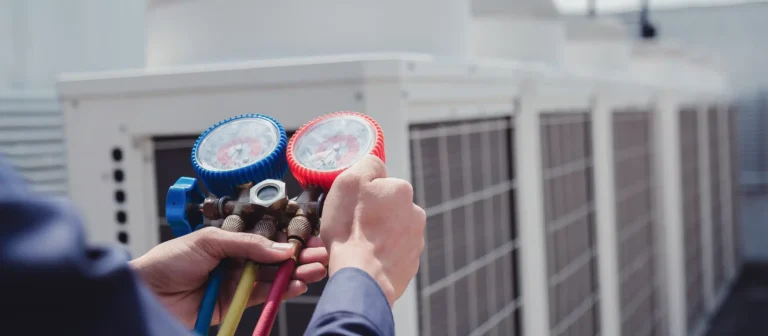
That does not mean trades never overlap. HVAC service includes electrical diagnosis inside equipment because the equipment depends on it. Contractor services connected to heating and cooling may include installation, maintenance, repairs, duct cleaning, and associated plumbing or electrical work. The phrase “associated with” does a lot of work there. It recognizes the practical overlap while still leaving room for proper licensing and professional boundaries.
The best contractors respect those boundaries without hiding behind them. If an HVAC tech finds a panel issue, they should say so clearly. If an Electrician sees that a unit’s internal controls are malfunctioning, they should point the owner back to HVAC service rather than performing interpretive dance with a furnace board. If a Plumber is doing water heater installation and notices electrical or HVAC conflicts in the same space, the right move is to coordinate rather than improvise.
Improvisation belongs in jazz. Mechanical rooms prefer documentation.
Energy performance depends on more than the utility bill
People often think of electrical work connected to HVAC equipment only when something fails. That is understandable. Broken equipment is persuasive. But electrical and mechanical details also affect performance.
Proper HVAC installation includes correct sizing and refrigerant charging. Proper charging of an air conditioner or heat pump can reduce energy consumption and lower failure risk. That sits alongside electrical reliability. A system that short-cycles because of control problems, struggles because of improper setup, or suffers from weak electrical components will not deliver the comfort or efficiency promised on the brochure.
Air conditioning maintenance supports performance by keeping the equipment in better operating condition and catching defects before they snowball. The same is true for heating service. A system does not need to be ancient to benefit from regular attention. Newer systems can still suffer from installation errors, control wiring issues, poor setup, or environmental wear. Older systems add their own hobbies, such as brittle wiring, tired motors, and components that have given all they care to give.
The point is not fear. The point is realism. HVAC equipment is a collection of mechanical and electrical parts doing hard work in heat, cold, moisture, dust, and vibration. Maintenance is not magic. It is housekeeping for machines with expensive opinions.
Commercial spaces add more coordination, not less
Residential work gets most of the dinner-table stories, but commercial and institutional HVAC systems also sit in this electrical-mechanical overlap. Contractors design, install, maintain, and service HVACR systems across residential, commercial, industrial, institutional, and governmental settings. The larger the building, the more important coordination becomes.
Commercial equipment may involve more complex controls, multiple units, rooftop equipment, ventilation requirements, refrigeration elements, and maintenance schedules. Access can be harder. Shutdown windows may be limited. A repair that would be inconvenient in a house can become a business interruption in a commercial space. Nobody wants the dining room too warm, the server room too hot, or the office thermostat war escalating into open conflict.
Electrical planning for HVAC equipment in these spaces must account for serviceability and reliability. HVAC technicians need safe access to disconnects and equipment. Electricians need accurate equipment requirements. Building owners need documentation that does not require archaeology. When these pieces are handled casually, the building keeps receipts.
The quiet value of a contractor who sees the whole room
A strong service company does not treat HVAC equipment as a lonely island. It sees the whole room: the panel, disconnect, condensate drain, water heater, furnace, air handler, filter access, gas line where applicable, plumbing layout, ventilation, and the route a technician must physically take to reach everything. That broader vision matters whether the call is for Air conditioning repair, Water heater repair, Drain cleaning, or Heat pump installation.
No single technician needs to perform every service. A Plumber should not be expected to diagnose every furnace control issue. An Electrician should not be expected to perform refrigerant work. An Air conditioning contractor should not be asked to solve every building wiring problem. But a well-run contractor understands how these systems touch and when to bring in the right expertise.
The customer experiences one problem: no cooling, no heat, water on the floor, breaker tripping, strange noise, or equipment that refuses to behave. Behind that problem may be multiple trades. The better the coordination, the less the customer has to referee.
There is also a plain financial benefit. Clear diagnosis reduces unnecessary part replacement. Proper planning avoids installation delays. Maintenance catches accessible issues before peak season. Good electrical support protects the investment in HVAC equipment. And when someone says, “We should get the Electrician involved,” that should not feel like an upsell. It should feel like someone noticed the edge of their license and chose competence over swagger.
What good coordination sounds like
You can often hear quality in the way a contractor explains a problem. Vague explanations breed suspicion. Clear ones build trust.
A weak explanation sounds like, “It is electrical.” That is barely a sentence wearing a tool belt.
A better explanation sounds like, “The outdoor unit is not receiving proper power at the disconnect, so the air conditioning equipment cannot be tested further until the supply issue is corrected.” Or, “The furnace has power, but the control board is not sending the expected signal to the blower motor, so we need to continue equipment-side diagnosis.” Or, “This heat pump installation may require electrical changes before the new equipment can be connected safely and correctly.”
Those explanations identify where the problem was found, what can and cannot be verified, and which trade should handle the next step. They avoid drama. They also avoid the classic service-call curse: three people standing around saying the previous person should have handled it.
A final word from the mechanical room
Electrician work connected to HVAC equipment is not a side note. It is one of the main reasons heating and cooling systems either behave beautifully or develop personalities.
Air conditioners, furnaces, heat pumps, water heaters, and the plumbing around them all live in the practical world, not the brochure world. They need correct installation, thoughtful maintenance, skilled repair, and honest coordination between trades. Sometimes that means an Air conditioning contractor handles the issue start to finish. Sometimes it means a Heating contractor diagnoses the furnace and an Electrician corrects the circuit. Sometimes a Plumber fixes the leak first so the HVAC and electrical components can be evaluated without standing in a puddle like characters in a bad safety video.
The smartest approach is neither territorial nor casual. It respects the specialized nature of HVAC work, the separate responsibilities of electrical work, and the messy reality that real buildings do not organize themselves by trade category. They put everything in one closet and dare professionals to make it work.
Good ones do.
Name: Service Lion Plumbing Heating Air Electric
Address: 521 W Briardale Ave, Orange, CA 92865, United States
Phone: (657) 567-7305
Website: https://callservicelion.com/
Email: [email protected]
Hours:
Monday: Open 24 hours
Tuesday: Open 24 hours
Wednesday: Open 24 hours
Thursday: Open 24 hours
Friday: Open 24 hours
Saturday: Open 24 hours
Sunday: Open 24 hours
Open-location code: R48R+WV Orange, California, USA
Map/listing URL:
https://www.google.com/maps/search/?api=1&query=Google&query_place_id=ChIJQU4LBWHV3IARtnABtyykSA4
Google Map:
Socials:
https://www.facebook.com/ServiceLionCA/
https://www.youtube.com/channel/UCR_L35QzsRTxYZtX8PxJvPw
Local Service Information
Service Lion Plumbing Heating Air Electric provides plumbing, drain, heating, air conditioning, and electrical services from its Orange, California location.The company serves homeowners and properties throughout Orange and communities across Orange County and surrounding areas.
Available services include plumbing repairs, water heater work, drain and sewer services, heating and cooling service, electrical repairs, panels, lighting, outlets, and related home-system work.
Service is available for residential properties as well as light commercial needs described within the company's local service-area information.
The company's website emphasizes locally operated service, coordinated home-system support, and practical scheduling for plumbing, HVAC, and electrical needs.
The matching public business listing shows the Orange location as open 24 hours a day, seven days a week.
For service information or scheduling, call (657) 567-7305 or visit https://callservicelion.com/.
The public map listing identifies the business at 521 W Briardale Ave, Orange, CA 92865 and can be used for location and direction information.
Popular Questions About Service Lion Plumbing Heating Air Electric
What services does Service Lion Plumbing Heating Air Electric provide?
The company provides plumbing, drain and sewer, heating, air conditioning, and electrical services. Its published services include plumbing repair, water heaters, drain clearing, sewer work, HVAC repair and installation, electrical repairs, panels, circuit breakers, lighting, outlets, and related services.
Where is Service Lion Plumbing Heating Air Electric located?
The matching business location is 521 W Briardale Ave, Orange, CA 92865, United States.
What areas does Service Lion Plumbing Heating Air Electric serve?
The company serves Orange County and surrounding communities. Its published service-area information includes Orange, Anaheim, Brea, Yorba Linda, Fullerton, Huntington Beach, Newport Beach, Costa Mesa, Irvine, Lake Forest, and additional nearby cities.
Is Service Lion Plumbing Heating Air Electric open 24 hours?
The matching public business listing shows the location as open 24 hours on Monday through Sunday.
Does Service Lion Plumbing Heating Air Electric work on drains and sewer lines?
Yes. Published services include drain clearing, rooter service, camera inspection, hydro jetting, sewer line repair and installation, water line work, slab leak detection, and trenchless sewer line repair.
Does Service Lion Plumbing Heating Air Electric provide heating and air conditioning service?
Yes. Its published HVAC services include air conditioning repair and installation, heating service, furnace work, heat pumps, air ducts, indoor air quality assessments, and thermostat installation.
Does Service Lion Plumbing Heating Air Electric provide electrical service?
Yes. Published electrical services include repairs and installations, electrical panels, circuit breakers, safety inspections, lighting, outlets and switches, surge protection, generators, and EV charging equipment installation.
How can I contact Service Lion Plumbing Heating Air Electric?
Call (657) 567-7305.
Email: [email protected]
Website: https://callservicelion.com/
Facebook: https://www.facebook.com/ServiceLionCA/
Landmarks Near Orange, California
Old Towne Orange Historic District
A central historic district and useful geographic reference point for the Orange community.
Plaza Park
A well-known public gathering point in the center of Old Towne Orange.
Orange Public Library & History Center
A civic landmark serving residents near central Orange.
Hart Park
A major public park and recreation area south of central Orange.
Eisenhower Park
A public park serving neighborhoods in northern Orange.
Santiago Oaks Regional Park
A regional recreation and open-space landmark on the eastern side of Orange.
Irvine Regional Park
A large regional park and recognizable reference point east of the city.
Orange Park Acres
A distinctive residential community and service-area reference point in eastern Orange.
El Modena
An established Orange neighborhood that provides a practical local coverage reference.
Glassell Street
One of the city's principal north-south streets and a useful route through central Orange.
Lincoln Avenue
A major east-west roadway serving northern Orange and nearby communities.
State Route 55
A primary regional freeway connecting Orange with other parts of Orange County.