Furnace Repair Service Before Winter: Why Early Service Matters
The first cold night of the season has a special talent for exposing every bad decision you made in September.
You remember September. The furnace was not on your mind. The weather was flirting with perfection, the windows were open, and your heating system was sitting quietly in the basement like a retired magician. Then November arrives, the thermostat clicks, the furnace grumbles awake, and suddenly the house smells like scorched dust and poor planning.
That is when the phone calls start.
Every heating contractor knows the rhythm. The first real cold snap hits, and the schedule goes from “we can see you Tuesday” to “we can squeeze you in sometime between dawn and the heat death of the universe.” Furnaces that could have been cleaned, adjusted, tested, or repaired weeks earlier now fail in clusters. Ignitors crack. Flame sensors sulk. Blower motors seize. Filters resemble archaeological artifacts. Homeowners begin making cocoa in parkas.
Getting furnace repair service before winter is not about being fussy. It is about timing, comfort, safety, money, and avoiding the kind of household tension that starts when someone says, “Didn’t you say you were going to call about the furnace?”
Your furnace does not enjoy surprise comebacks
A furnace spends months doing very little, then it is expected to run reliably for long stretches when outdoor temperatures drop. That is not a gentle job transition. It is like spending https://us.centralindex.com/company/1e6f2be8e98bbaafa6f48e0832e392e7/service-lion-plumbing-heating-air-electric/orange summer in a hammock and then being asked to run a half marathon while carrying a couch.
During the off-season, dust settles on burners, bearings can stiffen, electrical connections may loosen slightly from expansion and contraction, and air filters get forgotten behind a grille or inside a cabinet. If your system shares space with laundry, pets, woodworking hobbies, storage boxes, or the mysterious basement ecosystem every home seems to develop, it collects debris faster than people expect.
When the furnace starts again, all those small issues become active issues. A dirty flame sensor may cause the burners to light and shut off repeatedly. A weak ignitor might work three times, then fail on the fourth. A blower wheel loaded with dust can move less air, making the system run hotter and longer. A cracked belt on an older unit may limp through one cycle and snap during the next.
Early service gives a technician time to catch these things while they are still boring. Boring is wonderful in HVAC. Boring means the repair is scheduled, the part is available, and nobody is sleeping under three quilts while negotiating with a space heater.
The cold snap tax is real
Emergency heating repairs cost more in ways that do not always show up neatly on an invoice.
Yes, after-hours calls often carry premium rates. That part is obvious. But there is also the cost of limited choices. If your furnace fails on a bitter Saturday night, you are not comparison shopping with a cup of coffee. You are asking who can come now, who has the part, and whether they sound sober enough to be trusted near gas and electricity.
There is also the part availability problem. Common components like ignitors, flame sensors, pressure switches, control boards, blower motors, and draft inducer assemblies may be stocked by many companies, but not every part fits every furnace. Older furnaces can be especially dramatic. Some brands used proprietary components, some models changed mid-production, and some parts have been discontinued long enough to qualify as folklore.
A planned furnace repair service in early fall lets the technician identify a weak or failing part before it turns into a no-heat call. If a part needs ordering, that is annoying. If a part needs ordering when the house is 49 degrees inside, that is a family legend in the making, and not the charming kind.
Safety is not the place to improvise
A furnace is not just a warm-air box. It is a controlled fire inside your home, paired with electrical components, airflow requirements, venting, and sometimes a gas line. When everything works, it feels simple. When something is wrong, the risks can be serious.
A proper furnace inspection checks combustion, burner operation, heat exchanger condition where accessible, venting, safety switches, gas connections, electrical connections, blower performance, and thermostat communication. On gas furnaces, the technician also looks for signs of improper flame, rollout, delayed ignition, or venting trouble. None of these belong in the category of “eh, it will probably be fine.”
Carbon monoxide deserves special mention because it does not bang on pipes or leave puddles on the floor. It is odorless, invisible, and rude enough to show up without sending a calendar invite. A cracked heat exchanger, blocked flue, failed inducer, or poor combustion condition can create danger. Modern furnaces include safety controls, but safety controls are mechanical and electrical devices, not magical guardians.
If your home uses natural gas or propane, scheduling furnace service before winter pairs well with reviewing your gas installation service history, checking shutoff access, and making sure carbon monoxide alarms are working and not older than their recommended service life. Many alarms are rated for about five to ten years depending on the model. Pressing the test button only confirms the horn works, not that the sensor is young and spry.
An experienced heating contractor does not treat safety checks as decoration. They are the heart of the visit.
“It ran fine last year” is not a maintenance plan
This sentence appears in service calls with the frequency of a pop song chorus: “It ran fine last year.”
Of course it did. Last year’s performance is useful information, but it is not a warranty from the universe. Cars run fine until they do not. Water heaters heat water until the tank leaks or the burner assembly gives up. Drains flow until they clog at the least photogenic moment possible. Furnaces are no different.
The strange thing about heating equipment is that small declines can be hard to notice. A furnace may take a few extra minutes to satisfy the thermostat. The blower may sound slightly louder. The burners may light with a faint whoomp that was not there before. Rooms at the far end of the duct system may feel cooler. These changes creep in slowly, and the human brain is excellent at ignoring gradual inconvenience if the couch is comfortable.
A preseason visit gives you a baseline. The technician can measure temperature rise, inspect electrical draw, look at static pressure, clean key components, and test ignition and shutdown sequences. If the furnace is aging, that baseline matters. It helps distinguish between “this system needs a $200 part” and “this system is making a persuasive argument for replacement before February.”
The filter is small, but it has main character energy
If furnaces had a gossip column, filters would dominate it.
A dirty filter can cause weak airflow, overheating, short cycling, higher energy use, blower strain, and poor comfort. It can also make a perfectly decent furnace act like it has developed a personality disorder. The filter is cheap compared with the problems it can create, which is exactly why it gets ignored. Anything that inexpensive cannot possibly matter, right? Tell that to the blower motor.
Filter replacement frequency depends on the system, the filter type, pets, dust levels, remodeling work, and how much the fan runs. A one-inch filter may need attention every one to three months. A thicker media filter can often go longer. During heavy use, or in homes with shedding pets who appear to be assembling a second pet out of loose fur, filters may need more frequent changes.
The trick is not to worship a calendar. Check the filter. Hold it up, inspect it, and compare it with a clean one if you are unsure. If you cannot remember when it was changed, it is not a filter anymore. It is a dust quilt.
During a furnace repair service or tune-up, a technician should check filter condition and size. They should also make sure the filter rack is not allowing bypass, where air sneaks around the filter instead of through it. Bypass dust coats blower wheels, evaporator coils, secondary heat exchangers, and ductwork. In homes with central cooling, this can affect summer performance too, which is why a good Air conditioning contractor cares about heating maintenance and a good heating technician pays attention to the cooling side.
Early service helps your air conditioner too, oddly enough
Heating and cooling systems often share equipment. In many forced-air homes, the furnace blower moves air for both heat and central air conditioning. The evaporator coil for cooling may sit above or near the furnace. The thermostat controls both. Duct restrictions bother both. Electrical issues do not politely limit themselves to one season.
That means furnace service can uncover issues that affect next summer’s comfort. A weak blower capacitor, dirty blower wheel, loose low-voltage connection, or clogged condensate drain can show up during a heating visit. If the technician notices the cooling coil is dirty or the blower is underperforming, that can inform your spring Air conditioning maintenance or Air conditioning tune-up.
The same logic works in reverse. If you had Air conditioning repair in July, and the technician mentioned airflow trouble, odd blower noise, or thermostat issues, do not mentally file that under “summer problems.” Those may become heating problems in winter.
Homes with heat pumps make this overlap even more important. Heat pump installation has become more common in many regions, and heat pumps often rely on auxiliary or backup heat during colder weather. If that backup system is a gas furnace, electric heat kit, or dual-fuel setup, preseason testing matters. You do not want to discover the auxiliary heat is miswired or the gas furnace is locked out on the coldest morning of the year, when the heat pump is doing its best but clearly wondering why it did not move to Florida.
The difference between a tune-up and a repair
Homeowners sometimes use “service,” “maintenance,” “tune-up,” and “repair” interchangeably. Contractors do too, which does not help. The differences matter because expectations matter.
A furnace tune-up is preventive. The technician cleans, checks, tests, adjusts, and documents. They may replace a filter if provided or included. They may clean a flame sensor, inspect burners, verify venting, check safety controls, test the thermostat, and measure system operation. The goal is to reduce failure risk and improve performance.
A furnace repair service addresses a known problem. No heat. Intermittent heat. Loud noise. Burning smell beyond the first dusty startup. Furnace runs constantly. Furnace short cycles. Blower will not shut off. Error code flashing like a tiny mechanical distress signal. Repair requires diagnosis, parts when needed, and confirmation that the fault is resolved.
There is overlap. A tune-up may find a part that needs repair. A repair visit may include maintenance tasks because a dirty component caused the failure. But if your furnace is already acting up, say so when you call. A company can schedule the right appointment length and send a technician prepared for diagnosis, not just routine cleaning.
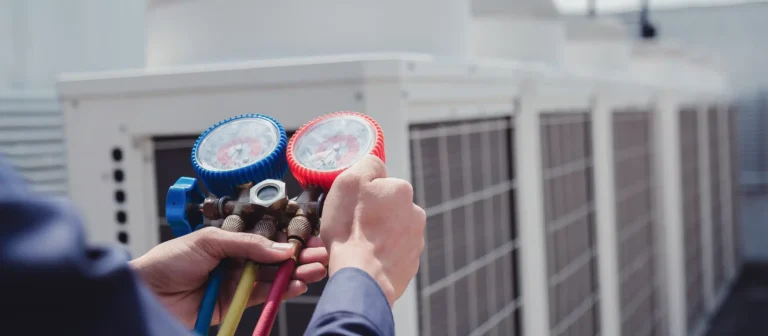
A good contractor would rather hear the embarrassing details upfront. “It makes a scraping sound for twenty seconds, then smells hot, then shuts down” is more useful than “It’s being weird.” Furnaces are allowed to be weird. Technicians need specifics.
What a sensible preseason furnace visit should include
Not every home needs the same work, and not every furnace has the same design. Still, a thorough preseason visit has a recognizable shape. It should feel methodical, not like someone opened the cabinet, nodded with theatrical confidence, and slapped a sticker on the front.
Here is a concise version of what deserves attention during a solid heating check:
- Inspect the thermostat, furnace startup, ignition sequence, burner flame, shutdown, and safety controls.
- Check the filter, blower compartment, blower wheel condition, motor operation, electrical connections, capacitors, and amp draw where applicable.
- Examine venting, condensate drainage on high-efficiency furnaces, gas connections, pressure switches, flame sensor, ignitor, and accessible heat exchanger areas.
- Measure temperature rise and look for airflow restrictions, duct issues, or signs the furnace is overheating or short cycling.
- Explain findings clearly, separate urgent safety concerns from routine recommendations, and provide repair options without theatrical doom.
That last point matters. Some repairs are urgent. A venting defect, rollout issue, gas leak, or unsafe heat exchanger concern is not a “think about it over the holidays” item. Other recommendations may be about reliability or efficiency. A weak capacitor, noisy inducer, or dirty blower may not require panic, but it deserves attention before the furnace gets a full winter workout.
The first burn smell: normal, suspicious, or “turn it off”?
A faint dusty smell during the first heating cycle of the season is common. Dust settles on heat exchanger surfaces and burns off when the furnace heats. It should fade quickly, often within an hour or less. Open a window briefly if you want, then feel smug that your nose still works.
But not every smell belongs in the “normal” bucket. A sharp electrical odor, melting plastic smell, persistent burning, sulfur or rotten egg odor, or smoke is different. Turn the system off and call for service. If you smell gas, leave the area and contact your gas utility or emergency services according to local guidance. Do not troubleshoot a suspected gas leak with a candle, a flashlight, or the confidence of a person who once fixed a toaster.
Musty odors can point to duct issues, dirty components, humidifier problems, or leftover moisture from the cooling season. If the system includes a whole-house humidifier, preseason is a good time to replace the pad, inspect the water line, and make sure the drain is clear. A neglected humidifier can create leaks, mineral buildup, and indoor air quality complaints that get blamed on the furnace by association.
The quiet efficiency losses nobody brags about
A neglected furnace may still heat the home, but it often takes the scenic route.
Dirty burners can reduce combustion quality. Dust on a blower wheel changes the shape of the blades and reduces airflow. Low airflow can raise furnace temperature, stressing components and causing limit switch trips. Leaky return ducts can pull cold air from basements, crawl spaces, or garages. Poor static pressure can make the blower work harder than it should. A thermostat in a bad location can cause uneven comfort and longer run times.
No single issue may double your heating bill. Real homes rarely behave that neatly. But several small issues together can waste energy and shorten equipment life. That is the boring truth, and boring truths are usually where the money hides.
If your furnace is more than 15 years old, annual attention becomes even more valuable. Plenty of furnaces last longer, especially when maintained, but aging equipment deserves closer observation. A technician can help you decide whether continued repair makes sense or whether replacement planning is wiser. The right answer depends on the furnace condition, repair cost, energy prices, home comfort, safety, and how long you plan to stay in the house.
The worst time to make that decision is while wearing gloves indoors.
Gas, electricity, drains, and the great home-system domino effect
Homes do not divide themselves into neat contractor categories as politely as business cards do. A furnace problem may involve gas piping, electrical circuits, condensate drainage, thermostat wiring, ductwork, or venting. That is why trade experience matters.
A gas furnace may need a qualified technician who understands combustion and gas installation service requirements. If the furnace loses power, trips breakers, or has damaged wiring, an Electrician may need to evaluate the circuit. If the furnace condensate line clogs, especially on a high-efficiency unit, the fix can feel suspiciously close to plumbing. In some basements, condensate drains into a floor drain that also accepts water softener discharge, humidifier drainage, or air conditioner condensate. When that drain backs up, your heating problem invites a Plumber to the party.
The same house might need Plumbing leak repair one month and furnace service the next. A leaking water heater near a furnace can create corrosion. A failed sump or floor drain backup can damage electrical components. Drain cleaning, Rooter service, or Hydrojetting may not sound related to heating, but a blocked basement drain can shut down a condensing furnace if water has nowhere to go. Houses love cross-training their problems.
Water heater repair and Water heater installation also intersect with combustion safety in homes where gas appliances share mechanical space. Venting changes, backdrafting concerns, and makeup air all matter. If someone recently finished a basement, added a powerful exhaust fan, replaced windows, or enclosed the mechanical room, the furnace and water heater may no longer breathe the way they used to.
Then there are homes with septic systems. A Septic system service issue will not directly break your furnace, unless life has become unusually cinematic, but basement plumbing backups and moisture problems can affect mechanical rooms. Moisture and electrical controls are not friends. They are coworkers who should never be seated together.
When repair is enough, and when replacement deserves a sober conversation
Nobody enjoys being told their furnace might need replacement. It ranks somewhere between dental surgery and hearing a suspicious noise from the washing machine. Still, repair is not always the smartest investment.
A small repair on a well-maintained 8-year-old furnace is usually straightforward. A major repair on a 22-year-old furnace with rust, airflow problems, and previous heat exchanger concerns deserves a deeper discussion. The math is not just the cost of the current repair. It includes likely future repairs, efficiency, comfort, safety, warranty coverage, and whether parts remain available.
A homeowner once told me, “I don’t want a new furnace, I want this one to stop auditioning for a haunted house.” Fair enough. The inducer motor was screaming, the burners were dirty, the blower capacitor was weak, and the cabinet had corrosion around the condensate trap. Could it be repaired? Yes. Was it the best long-term move? Not really. He replaced it in October instead of during a January failure, and later admitted the best part was not the efficiency improvement. It was sleeping through the night without wondering if the basement had started a percussion section.
Replacement planning before winter gives you time to compare equipment, ask about rebates if available, evaluate ductwork, consider indoor air quality options, and decide whether a heat pump installation or dual-fuel system makes sense. Emergency replacement rarely gives you that luxury. Emergency replacement gives you coffee, stress, and a suspiciously large number of browser tabs.
Do not ignore the ductwork just because it lacks blinking lights
Furnaces get the attention because they make heat. Ductwork distributes it, and it can ruin a good furnace’s reputation.
Leaky supply ducts waste heated air. Leaky return ducts pull in cold, dusty, or humid air from places you would not willingly breathe from. Undersized ducts raise static pressure and reduce airflow. Closed registers, blocked returns, and furniture placed over vents can cause comfort complaints that homeowners blame on the equipment.
During preseason service, ask about airflow if certain rooms are consistently cold. The answer may not be a bigger furnace. In fact, oversized furnaces often create short cycling and uneven heat. The fix might involve duct sealing, balancing dampers, return air improvements, insulation, or correcting a crushed flex duct. Less glamorous than a new machine, yes. Often more effective, also yes.
If a contractor recommends replacing a furnace without paying any attention to ductwork, ask questions. A new furnace connected to a bad duct system is like hiring a professional chef and handing them a camping spoon.
The homeowner’s pre-winter sanity check
You do not need to become an HVAC technician. The world has enough people staring into furnace cabinets with misplaced confidence. But a few homeowner checks before the heating season can save time and help your technician arrive with better information.
Use this short check before calling or before the first cold week:
- Replace or inspect the air filter, and make sure all return grilles are open and unobstructed.
- Turn the thermostat to heat and raise the setpoint a few degrees to confirm the furnace starts and warm air reaches the rooms.
- Listen for scraping, grinding, booming ignition, repeated starts and stops, or blower sounds that seem newly dramatic.
- Check the furnace area for stored items, water stains, rust, blocked vents, or anything leaning against the equipment.
- Confirm carbon monoxide alarms are installed, powered, and within their service life.
If anything seems off, schedule service. Do not wait for the furnace to “work it out.” Furnaces are machines, not teenagers. They do not grow through phases.
Why September and October are the sweet spot
The best time for furnace service depends on your climate, but early fall is often ideal. In many regions, September and October offer enough mild weather to test the heating system without urgency. Contractors usually have better scheduling flexibility before the first hard cold snap. Parts suppliers are not yet buried under emergency demand. Homeowners can make decisions with normal human brain function, not the frosty panic version.
There is another advantage: technicians are less rushed. Good companies do not want rushed work at any time, but peak season is peak season. When hundreds of homes lose heat in the same week, the pressure rises. A preseason visit gives everyone breathing room. The technician can inspect carefully, explain clearly, and return for repair if a part is needed.
Early service also lets you test the system afterward. If a repair is made in October, you can run the furnace through several cycles before winter settles in. Intermittent issues sometimes need observation. That is much easier when the outdoor temperature is 48 degrees than when it is 8 and the dog is judging you.
Choosing the right company without needing a detective board
The right contractor matters more than the sticker on the furnace. Look for licensing where required, insurance, clear pricing practices, and technicians trained on your equipment type. Read reviews, but read them like an adult. One angry review about a scheduling delay during a blizzard may not tell the whole story. Patterns matter more than single fireworks.
A company that handles multiple home services can be helpful, especially in older homes where heating, cooling, plumbing, and electrical issues overlap. If the same team includes a Plumber, Electrician, Air conditioning repair service, Lighting contractor, and Heating contractor, communication can be simpler when a furnace issue touches wiring, drains, gas piping, or related mechanical systems. That said, breadth only helps if the company has real expertise in each trade. A van full of logos is not a credential by itself.
Ask what the furnace visit includes. Ask whether combustion analysis is performed when appropriate. Ask how repair recommendations are presented. You want clear language, not scare tactics. “Your inducer motor is drawing high amperage and the bearings are noisy, so replacement is recommended before failure” is useful. “This thing could go any minute” followed by a dramatic sigh is theater.
The oddball cases that deserve extra attention
Some homes need more than a standard once-over.
If you have recently remodeled, tightened the home envelope, replaced windows, added insulation, or changed exhaust appliances, combustion air and ventilation deserve review. Tighter homes can alter appliance drafting. Powerful kitchen hoods, bath fans, and clothes dryers can create pressure differences that affect natural draft appliances.
If your furnace is in an attic or crawl space, service access and venting conditions matter. Attic furnaces face temperature extremes and sometimes suffer from neglected filters because nobody wants to climb into an attic to perform a responsible adult task. Crawl space furnaces can face moisture, pests, corrosion, and clearance issues. These installations are not automatically bad, but they are less forgiving.
If the furnace has a history of short cycling, repeated limit trips, or cracked heat exchanger concerns, do not accept a quick reset as a solution. The underlying cause may be airflow, gas pressure, venting, equipment sizing, or duct design. Resetting a safety switch without diagnosing the reason it opened is like silencing a smoke alarm because dinner is inconveniently on fire.
If you have an older standing-pilot furnace, the inspection should include pilot operation, thermocouple or thermopile condition, burner cleanliness, and venting. These systems can run for a long time, but age does not grant immunity. It grants character, and character often comes with rust.
Comfort is the point, not just “the furnace runs”
A furnace can operate and still fail at its actual job. The real goal is not a machine that turns on. The goal is a home that feels comfortable, safe, and predictable.
Uneven temperatures, dry air, noisy ducts, constant cycling, and cold floors all deserve attention. Sometimes the solution is furnace repair. Sometimes it is air balancing, duct sealing, insulation, thermostat relocation, humidification, or adding returns. Sometimes the home has a plumbing or moisture issue contributing to comfort complaints, and Water softener installation, Plumbing repiping, or leak correction enters the broader home comfort conversation. That does not mean every furnace visit should become a whole-house renovation proposal. It means the best technicians think beyond the blinking error code.
A good service visit should leave you with more than a working furnace. You should understand what condition the system is in, what was done, what may need attention later, and how to operate it wisely. If the only explanation you receive is “You’re good,” that is Plumber better than “You’re doomed,” but still a bit thin.
The small effort that prevents big winter nonsense
Pre-winter furnace service is one of those adult tasks that lacks glamour. Nobody posts a photo of a clean flame sensor with the caption “blessed.” Nobody invites neighbors over to admire proper temperature rise. Yet this is exactly the kind of maintenance that makes a house feel civilized when the weather turns unpleasant.
Early furnace repair service gives you time. Time to find problems before they become emergencies. Time to order parts. Time to budget. Time to ask questions. Time to avoid the midnight chorus of a furnace trying and failing to ignite while the thermostat looks on in silent disappointment.
Winter is demanding enough without turning your heating system into a suspense plot. Schedule the service while the weather is still reasonable, while contractors have room on the calendar, and while your furnace’s problems are still small enough to be dull. Dull is underrated. Dull is warm. Dull does not require mittens indoors.
Name: Service Lion Plumbing Heating Air Electric
Address: 521 W Briardale Ave, Orange, CA 92865, United States
Phone: (657) 567-7305
Website: https://callservicelion.com/
Email: [email protected]
Hours:
Monday: Open 24 hours
Tuesday: Open 24 hours
Wednesday: Open 24 hours
Thursday: Open 24 hours
Friday: Open 24 hours
Saturday: Open 24 hours
Sunday: Open 24 hours
Open-location code: R48R+WV Orange, California, USA
Map/listing URL:
https://www.google.com/maps/search/?api=1&query=Google&query_place_id=ChIJQU4LBWHV3IARtnABtyykSA4
Google Map:
Socials:
https://www.facebook.com/ServiceLionCA/
https://www.youtube.com/channel/UCR_L35QzsRTxYZtX8PxJvPw
Local Service Information
Service Lion Plumbing Heating Air Electric provides plumbing, drain, heating, air conditioning, and electrical services from its Orange, California location.The company serves homeowners and properties throughout Orange and communities across Orange County and surrounding areas.
Available services include plumbing repairs, water heater work, drain and sewer services, heating and cooling service, electrical repairs, panels, lighting, outlets, and related home-system work.
Service is available for residential properties as well as light commercial needs described within the company's local service-area information.
The company's website emphasizes locally operated service, coordinated home-system support, and practical scheduling for plumbing, HVAC, and electrical needs.
The matching public business listing shows the Orange location as open 24 hours a day, seven days a week.
For service information or scheduling, call (657) 567-7305 or visit https://callservicelion.com/.
The public map listing identifies the business at 521 W Briardale Ave, Orange, CA 92865 and can be used for location and direction information.
Popular Questions About Service Lion Plumbing Heating Air Electric
What services does Service Lion Plumbing Heating Air Electric provide?
The company provides plumbing, drain and sewer, heating, air conditioning, and electrical services. Its published services include plumbing repair, water heaters, drain clearing, sewer work, HVAC repair and installation, electrical repairs, panels, circuit breakers, lighting, outlets, and related services.
Where is Service Lion Plumbing Heating Air Electric located?
The matching business location is 521 W Briardale Ave, Orange, CA 92865, United States.
What areas does Service Lion Plumbing Heating Air Electric serve?
The company serves Orange County and surrounding communities. Its published service-area information includes Orange, Anaheim, Brea, Yorba Linda, Fullerton, Huntington Beach, Newport Beach, Costa Mesa, Irvine, Lake Forest, and additional nearby cities.
Is Service Lion Plumbing Heating Air Electric open 24 hours?
The matching public business listing shows the location as open 24 hours on Monday through Sunday.
Does Service Lion Plumbing Heating Air Electric work on drains and sewer lines?
Yes. Published services include drain clearing, rooter service, camera inspection, hydro jetting, sewer line repair and installation, water line work, slab leak detection, and trenchless sewer line repair.
Does Service Lion Plumbing Heating Air Electric provide heating and air conditioning service?
Yes. Its published HVAC services include air conditioning repair and installation, heating service, furnace work, heat pumps, air ducts, indoor air quality assessments, and thermostat installation.
Does Service Lion Plumbing Heating Air Electric provide electrical service?
Yes. Published electrical services include repairs and installations, electrical panels, circuit breakers, safety inspections, lighting, outlets and switches, surge protection, generators, and EV charging equipment installation.
How can I contact Service Lion Plumbing Heating Air Electric?
Call (657) 567-7305.
Email: [email protected]
Website: https://callservicelion.com/
Facebook: https://www.facebook.com/ServiceLionCA/
Landmarks Near Orange, California
Old Towne Orange Historic District
A central historic district and useful geographic reference point for the Orange community.
Plaza Park
A well-known public gathering point in the center of Old Towne Orange.
Orange Public Library & History Center
A civic landmark serving residents near central Orange.
Hart Park
A major public park and recreation area south of central Orange.
Eisenhower Park
A public park serving neighborhoods in northern Orange.
Santiago Oaks Regional Park
A regional recreation and open-space landmark on the eastern side of Orange.
Irvine Regional Park
A large regional park and recognizable reference point east of the city.
Orange Park Acres
A distinctive residential community and service-area reference point in eastern Orange.
El Modena
An established Orange neighborhood that provides a practical local coverage reference.
Glassell Street
One of the city's principal north-south streets and a useful route through central Orange.
Lincoln Avenue
A major east-west roadway serving northern Orange and nearby communities.
State Route 55
A primary regional freeway connecting Orange with other parts of Orange County.