Gas Installation Service and Contractor Safety Considerations
Gas work has a way of humbling even seasoned tradespeople. A pipe looks simple enough until it passes through a crowded mechanical room, elbows around a furnace, shares space with electrical wiring, and ends near equipment that also needs air, drainage, ventilation, maintenance access, and a technician who can still fit a wrench in there without needing the flexibility of a circus ferret.
A good gas installation service is not just “put pipe here, connect appliance there, collect invoice, go home.” It sits at the intersection of plumbing, heating, air conditioning, ventilation, appliance installation, repair planning, and jobsite coordination. That is why the best contractors treat gas work as part of a larger mechanical system rather than a lonely pipe with ambition.
Plumbing, heating, and air-conditioning contractors occupy a specialized trade category for a reason. Their work commonly involves heating equipment installation, furnace repair, plumbing repair, air-conditioning work, refrigeration-related service, sewer hookups, sump pump service, and water pump installation. Electrical work is its own trade category, but in real buildings it often stands shoulder to shoulder with HVAC and plumbing. That is where safety gets interesting. Not dramatic, not theatrical, just interesting in the way a loose fitting behind a finished wall is interesting: quietly expensive if nobody pays attention.
Gas installation is a mechanical conversation, not a solo act
The phrase “gas installation service” sounds tidy. It suggests a neat transaction, perhaps a van, a technician, a pipe wrench, and a customer who points at the wall and says, “The new furnace goes there.” Reality is less tidy and much more useful.
Gas-fired equipment usually belongs to a broader system. A furnace is tied to ductwork, controls, venting, and sometimes air conditioning components. A water heater may share a utility room with plumbing, electrical service, condensate drainage, and possibly a water softener installation nearby. A heat pump installation may not use gas in the same way a furnace does, but it can still be part of a home comfort decision where a heating contractor compares equipment choices, installation conditions, and long-term service needs.
That overlap matters because contractors do not work in little glass boxes. A plumber doing water heater installation may need to understand where HVAC equipment sits. An air conditioning contractor may need to consider how cooling equipment, refrigerant charging, ductwork, and airflow relate to the same mechanical space. An electrician may be needed for power, controls, or service circuits. A lighting contractor might not touch gas work, but lighting in a mechanical area affects whether technicians can actually see what they are servicing, which is a wildly underrated safety feature. Anyone who has tried to inspect equipment under a single dusty bulb knows the pain.
A contractor who sees only one trade can miss the way systems lean on each other. That is how you get piping that blocks a service panel, a drain line that makes furnace access miserable, or a unit placed so close to a wall that the next furnace repair service technician has to remove half the room to do a basic repair. None of that is glamorous, but safe work has never needed glamour. It needs attention.
The contractor’s first safety tool is scope clarity
Before anyone reaches for fittings or test instruments, the job needs a defined scope. Not a vague “install gas line” scribbled on a ticket like a grocery list after a long day. The contractor needs to know what equipment is being served, what other systems are involved, and whether the work touches plumbing, HVAC, electrical, or related service categories.
This matters because HVAC contractors specialize in installing and maintaining heating, ventilation, and air-conditioning equipment. Their services can include installation, maintenance, repairs, duct cleaning, and the plumbing or electrical work associated with heating and cooling equipment. That does not mean one person should casually do everything. It means the work often crosses boundaries, and the contractor must manage those boundaries honestly.
If the job involves a furnace replacement, the gas connection is only part of the work. The system may also involve heating equipment setup, duct connections, control wiring, airflow considerations, and future maintenance access. If the job involves a gas water heater, then plumbing connections, water heater repair history, venting conditions, and placement all matter. If the job is part of a larger remodel, the schedule may include an electrician, a plumber, a heating contractor, and possibly an air conditioning repair service if existing cooling equipment is being disturbed. When nobody owns coordination, coordination does not happen. It wanders off, buys a sandwich, and leaves the trades to argue in the hallway.
Clear scope also protects the customer. A homeowner may not know whether a job needs a plumber, heating contractor, or air conditioning contractor. They just know the equipment is old, the house is uncomfortable, or the utility room looks like a metal octopus moved in during the 1980s. Good contractors translate the mess into plain language. They explain which systems are affected and which specialist is responsible for what.
The trades that gather around gas work
Gas installation often attracts a small cast of characters. The plumber may handle fuel piping and water-side work. The heating contractor may install or replace the furnace. The air conditioning contractor may be involved if the indoor coil, ductwork, or comfort system is affected. The electrician may provide wiring, disconnects, or controls. On some properties, septic system service, drain cleaning, rooter service, or hydrojetting may be happening as separate work in the same general maintenance season, not because gas work requires them, but because buildings like to age in clusters. One thing breaks, and suddenly the house starts behaving like it has a group chat.
The safety consideration here is not that every trade must be on every job. That would be absurd and crowded. The point is that the contractor must recognize when another trade’s work affects the installation.
For example, a water heater installation might appear to be a plumbing task, but it may sit in a space where heating and air conditioning equipment is also located. Access for air conditioning maintenance or a future air conditioning tune-up should not be sacrificed by careless placement. A furnace repair service technician should not have to snake around unrelated piping because nobody thought about service clearance. An electrician should not arrive after the mechanical work and discover that equipment location made electrical access awkward. Good sequencing prevents grumbling, rework, and the kind of silence that happens when two tradespeople look at the same mistake and both know exactly who made it.
A compact pre-work safety checklist
A checklist cannot replace judgment, but it can prevent the kind of obvious miss that becomes less obvious at 4:30 p.m. On a Friday. For gas-related mechanical work, a short pre-work review should cover the essentials without turning the job into paperwork theater.
- Confirm the equipment being served and whether the work affects heating, cooling, plumbing, or electrical systems.
- Identify which contractor or technician is responsible for each portion of the work.
- Check that future service access is preserved for repairs, maintenance, and replacement.
- Review manufacturer-related installation requirements for the equipment involved.
- Make sure the customer understands the scope before work begins.
That last one sounds soft, but it is not. Confused customers make confused decisions. If they think they purchased a complete HVAC update when they actually approved only a gas connection, trouble is already warming up in the bullpen.
Proper HVAC installation has safety consequences
Heating and cooling equipment does not forgive lazy installation. ENERGY STAR guidance emphasizes correct equipment sizing and proper refrigerant charging for air conditioners and heat pumps. Proper charging can reduce energy consumption and lower the risk of failure. That matters in an article about gas work because mixed mechanical systems are common. A home may have a gas furnace paired with central air conditioning. A contractor may be replacing heating equipment while leaving cooling equipment in place. A heat pump installation may be considered alongside or instead of other heating options.
Sizing and charging sound like comfort and efficiency issues, and they are. But they also influence reliability. Equipment that runs poorly tends to get serviced more often. More service calls mean more opportunities for hurried work, temporary fixes, and frustrated decisions. A sloppy installation creates its own little weather system of future problems.
An air conditioning repair service technician called to deal with poor cooling may discover that the issue traces back to installation quality. An air conditioning maintenance visit may reveal that equipment access is poor because another component was installed in the way. An air conditioning tune-up may be straightforward when the original contractor planned for service, or unnecessarily annoying when the system was treated like a puzzle box.
Gas installation service should borrow that same discipline. The work should fit the equipment, the space, and the maintenance lifecycle. Contractors who install for the next service call, not just the final invoice, tend to leave safer, cleaner jobs behind.
Why “associated work” deserves respect
One of the trickier parts of mechanical contracting is associated work. It is the stuff attached to the main thing, and it often causes more trouble than the main thing.
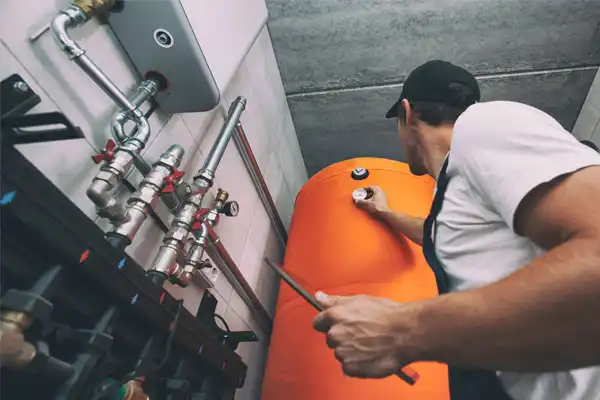
An HVAC contractor may be hired to install heating and cooling equipment, but the job can involve plumbing or electrical work associated with that equipment. That phrase deserves a spotlight. Associated work is where assumptions breed. The heating contractor thinks the electrician is handling a connection. The electrician thinks the HVAC crew is providing equipment placement information. The plumber thinks the appliance location is final. The customer thinks all of it is included because the proposal used the word “complete,” which is a fine word until lawyers or inspectors get interested.
A safer contractor pauses before the job starts and names the associated work. If plumbing leak repair is discovered near the work area, is it part of the project or a separate repair? If a drain cleaning issue is affecting condensate or equipment drainage, who addresses it? If plumbing repiping is underway, does it conflict with mechanical equipment installation? If water softener installation is planned in the same room, will the layout still allow access to the water heater and furnace?
These are not exotic problems. They are Tuesday problems. They happen in basements, utility closets, garages, crawlspaces, and commercial mechanical rooms where every trade believes it only needs “a little space.” Buildings, unfortunately, are not made of expandable accordion walls.
The repair technician’s view of installation safety
Installers and repair technicians sometimes see the same job through different glasses. Installers focus on getting new equipment placed, connected, and operating. Repair technicians focus on what happens three winters from now when a part fails during a cold snap and everyone wants heat restored before dinner.
The best installers think like repair technicians. They ask whether a furnace repair service technician can reach panels and components without dismantling unrelated work. They consider whether water heater repair will require room to move tools. They avoid creating access conflicts with air conditioning repair. They do not bury valves, connections, filters, or service points behind other equipment.
That mindset is not sentimental. It is practical. Equipment will need service. Air conditioning maintenance will happen. Heating equipment will age. A water heater will eventually be replaced. Drain cleaning may be needed. Rooter service or hydrojetting may bring technicians into nearby spaces. Septic system service may be unrelated to the mechanical room, but it still belongs to the broader category of property maintenance where access, sequencing, and safety planning matter.
A building that is easy to service is usually safer to service. Technicians can work deliberately instead of contorting themselves around obstacles. They can see what they are doing. They are less likely to rush, improvise, or skip checks because everything is buried behind a homemade shelf full of paint cans from three owners ago.
Electrical boundaries are not decorative
Electrical work is separately classified from plumbing, heating, and air-conditioning work. That separation matters. Gas equipment often needs electrical power or controls, but that does not make electrical work a casual side quest.
A disciplined contractor knows when to involve an electrician. The same goes for a lighting contractor when lighting is part of a broader workspace improvement or commercial project. Better lighting in mechanical areas may sound boring until someone has to inspect equipment, read labels, or work safely around tight clearances. Poor lighting turns ordinary service into a guessing game, and guessing games belong at county fairs, not around mechanical equipment.
The key safety habit is boundary respect. A plumber should not pretend to be an electrician because the electrical task looks small. An HVAC technician should not ignore electrical coordination because “we only need a connection.” Conversely, an electrician should understand that their work may affect service access and equipment layout. Each trade brings its own standards, training, and risks. The building does not care which license category a mistake came from. It only knows the mistake exists.
Air conditioning and gas equipment often share a handshake
Many comfort systems combine heating and cooling equipment in ways that make contractor coordination unavoidable. A gas furnace may serve as the air handler for central air conditioning. A cooling coil may sit near heating equipment. Ductwork may serve both seasons. An air conditioning contractor may be focused on refrigerant charge, equipment sizing, airflow, and maintenance access, while the heating contractor is focused on the furnace leak repair and related components.
When those priorities are coordinated, the customer gets a system that behaves. When they are not, the customer gets a mechanical room that looks finished but feels argumentative. The air conditioning repair service may later discover that cooling performance suffers because installation decisions were rushed. The heating contractor may find that furnace access was compromised by cooling equipment placement. The homeowner may wonder why two expensive systems appear to be having a marital dispute.
Proper installation is not only a matter of fitting parts together. It requires the contractor to consider the equipment as a system. Correct sizing and refrigerant charging are part of quality HVAC installation for air conditioners and heat pumps. Gas equipment installation should receive the same level of seriousness in its own lane. The shared goal is equipment that operates reliably, uses energy sensibly, and can be maintained without demolition cosplay.
When maintenance reveals installation sins
Maintenance technicians are historians. They read the past through fasteners, clearances, stains, labels, access panels, and the mysterious choices of people who are not present to defend themselves.
An air conditioning tune-up can reveal whether equipment was installed with service in mind. Air conditioning maintenance can show if the system was charged properly, maintained reasonably, and placed accessibly. Water heater repair may reveal whether the original installation allowed simple servicing or turned every task into a wrestling match. Plumbing leak repair may uncover piping decisions that looked neat on day one but aged poorly.
Gas installation service leaves similar fingerprints. A clean installation is not merely straight pipe and tidy fittings. It is a job that makes sense when someone returns later. It allows identification, access, repair, and replacement planning. It does not force future technicians to choose between safety and speed.
There is a kind of professional courtesy in that. Tradespeople may never meet the person who services their installation later, but they can still leave the work in a condition that says, “I thought about you.” It is the mechanical equivalent of returning the shopping cart. Society may not collapse if you fail, but people notice.
Common coordination failures worth avoiding
Some mistakes are not dramatic enough for training videos, yet they cause a steady drip of trouble. They come from vague scopes, poor sequencing, or a contractor treating one system as if the others are background scenery.
| Coordination issue | Why it matters | |---|---| | Mechanical equipment placed without service access | Future repair and maintenance become harder, slower, and less predictable | | Plumbing, HVAC, and electrical work scheduled independently | Trades may block each other or require rework | | Cooling equipment changes ignored during heating work | Air conditioning repair or maintenance may become more difficult later | | Associated plumbing work left undefined | Water heater installation, plumbing leak repair, or repiping may conflict with the main job | | Customer expectations not clarified | Disputes arise over what was included and who owns related work |
A table is tidy, but the field version is rarely tidy. The field version involves a technician standing in a cramped space saying, “Who put this here?” with the emotional range of a Shakespearean actor and the vocabulary of someone trying not to swear in front of the customer.
Choosing a contractor without needing a detective board
Customers do not need to become mechanical engineers to hire well. They do, however, need to ask better questions than “How much?” Price matters, of course. Budgets are real. But gas installation service and related HVAC or plumbing work should be judged on scope, coordination, qualifications, and maintenance thinking.
A good contractor can explain whether the job belongs primarily to a plumber, heating contractor, air conditioning contractor, or a combination of trades. They can describe whether associated electrical work is needed. They can speak clearly about installation, maintenance, repairs, and future access. They do not hide behind foggy language. If the job involves air conditioning repair, furnace replacement, water heater installation, heat pump installation, or plumbing repiping, they should be able to explain how that work affects nearby systems.
A customer should be wary of anyone who treats every question as an inconvenience. Skilled tradespeople may be busy, direct, and allergic to nonsense, but the good ones can still explain the plan. They know that clarity before work begins prevents arguments after work ends.
The five questions that separate pros from pipe enthusiasts
A homeowner or property manager does not need a clipboard worthy of a nuclear facility. Five plain questions can reveal whether a contractor is thinking like a professional or simply quoting the visible portion of the job.
- Which trades are involved in this installation, and where does your responsibility begin and end?
- Will this work affect heating, air conditioning, plumbing, or electrical systems already in place?
- How will the installation preserve access for future maintenance and repair?
- Are there related issues, such as water heater repair, plumbing leak repair, or air conditioning maintenance, that should be addressed before installation?
- What assumptions are included in the estimate, and what would change the scope?
Those questions do not insult a competent contractor. They invite a competent contractor to shine. If the answers are clear, practical, and specific to the job, that is a good sign. If the answers sound like fog wearing work boots, keep asking.
Commercial and residential work share the same bones
Residential and commercial jobs differ in scale, scheduling, access, and complexity, but the safety principles rhyme. HVACR contractors design, install, maintain, and service systems across residential, commercial, industrial, institutional, and governmental settings. The equipment changes. The number of people involved changes. The need for coordination does not.
In a house, the mechanical room may be a corner of the basement guarded by holiday decorations. In a commercial building, the equipment may sit in a dedicated room or on a roof, with more formal maintenance schedules and more people affected by downtime. Either way, installation choices influence future service. Either way, plumbing, heating, air conditioning, and electrical work can overlap. Either way, the contractor who plans carefully usually saves everyone grief later.
Commercial work often makes the coordination more visible because multiple contractors may be onsite at once. Residential work can hide the same problem in miniature. The homeowner may hire a plumber for water heater installation, then an air conditioning repair service, then an electrician, each arriving weeks apart. Without a shared plan, each job can accidentally make the next one harder. The building remembers every decision, even the tiny ones.
The odd neighbors: drains, roots, water treatment, and septic work
Gas installation does not require a sermon on drain cleaning, rooter service, hydrojetting, water softener installation, or septic system service. Still, these services often orbit the same contractor universe, especially in companies that handle both plumbing and HVAC. It is worth mentioning them because mechanical safety is not only about the appliance being installed today. It is also about the condition of the surrounding systems.
A utility area with active plumbing leak repair may not be ready for clean equipment installation. A drain problem may affect where condensate or discharge lines can be routed for associated equipment. Plumbing repiping may change wall access, equipment spacing, or future service routes. Water softener installation may compete for floor space near a water heater or furnace. Septic system service usually lives outside the gas installation lane, but it may be part of broader property work where scheduling and access still need coordination.
The practical lesson is simple: contractors should ask what else is happening on the property. Customers should mention upcoming work, even if it seems unrelated. Tradespeople are good, but they are not mind readers. If they were, every service call would start with, “Yes, I know about the valve behind the bookshelf, and no, that is not where it belongs.”
Repair versus replacement: safety in the gray area
Not every job begins as an installation. Sometimes a customer calls for furnace repair service or water heater repair and ends up discussing replacement. Sometimes air conditioning repair turns into a larger conversation about equipment age, performance, maintenance history, and installation quality. Sometimes plumbing leak repair reveals that plumbing repiping deserves consideration. The gray area between repair and replacement is where judgment matters.
A contractor should not leap to replacement just because it is larger work, and should not cling to repair when the system no longer supports reliable service. The safety consideration is not merely whether the equipment can be coaxed back into operation. It is whether the surrounding installation is sound, accessible, maintainable, and appropriate for the equipment. A repair that leaves a bigger underlying problem untouched may only buy time. Time can be useful, but it should not be sold as a miracle.
Customers appreciate honest trade-offs. “This repair may get you through the season, but access is poor and the installation has limitations” is a very different message from “All fixed.” The first one respects reality. The second one may be technically true for about nine minutes.
Refrigerant work belongs to trained hands too
Gas installation service may focus on fuel and heating equipment, but many HVAC jobs also involve air conditioners and heat pumps. Refrigeration equipment is treated seriously for maintenance, service, repair, and installation roles. Air conditioners and other refrigeration equipment fall under the relevant appliance definitions for refrigerant-related rules, and technicians involved in service and repair can include installers and contractor employees.
For the customer, the lesson is straightforward: do not assume cooling-side work is casual because the visible equipment looks familiar. Air conditioning repair, air conditioning maintenance, and heat pump installation require proper handling by people who understand the systems they are touching. Correct refrigerant charging is part of quality installation and can reduce energy consumption and lower failure risk. That is not trivia. It is the difference between a system that runs as designed and one that limps along while everyone blames the thermostat.
Mixed heating and cooling work should be scoped carefully. If a gas furnace replacement affects the air conditioning coil or connected components, the contractor should explain what is included. If a heat pump installation changes the heating plan, the customer should understand how that affects existing equipment. Mechanical systems are sociable. They rarely change alone.
The safety culture you can hear in the first conversation
Contractor safety does not begin when the van doors open. It begins in the first conversation. A careful contractor asks what equipment is present, what problem the customer is trying to solve, what work has been done recently, and what other trades are scheduled. They do not diagnose an entire mechanical system from a single blurry photo, though photos can help. They avoid promising invisible miracles. They use clear language.
You can hear safety culture in how a contractor handles uncertainty. The weaker answer is false confidence. The stronger answer is, “We need to verify that onsite.” That sentence may not sparkle, but it is honest. Buildings vary. Equipment varies. Existing installations vary wildly, especially in older properties where decades of repairs have accumulated like geological layers.
Wit has its place, and so does humility. The best tradespeople I have known could joke about a messy mechanical room while still treating the work with complete seriousness. They knew that laughter makes hard work human, but it does not tighten fittings, plan access, or coordinate trades. The wrench still has to meet the work.
What safe gas installation service really sells
Customers often think they are buying a connection, a repair, or an appliance installation. They are actually buying judgment. The visible work matters, but the invisible decisions matter more: where equipment goes, how systems interact, whether future access remains possible, whether associated work is identified, and whether the right trades are involved.
A strong gas installation service understands its place among plumbing, heating, ventilation, air conditioning, electrical coordination, and long-term maintenance. It respects the roles of the plumber, air conditioning contractor, electrician, heating contractor, and specialized repair technician. It sees water heater installation, furnace repair service, air conditioning repair, plumbing leak repair, drain cleaning, and related services not as random menu items, but as pieces of a building that must keep functioning after the invoice is paid.
That is the quiet craft behind safe contracting. Not flashy. Not mystical. Just steady, thoughtful work performed by people who know that every installation becomes someone else’s service call someday. The best contractors install accordingly.
Name: Service Lion Plumbing Heating Air Electric
Address: 521 W Briardale Ave, Orange, CA 92865, United States
Phone: (657) 567-7305
Website: https://callservicelion.com/
Email: [email protected]
Hours:
Monday: Open 24 hours
Tuesday: Open 24 hours
Wednesday: Open 24 hours
Thursday: Open 24 hours
Friday: Open 24 hours
Saturday: Open 24 hours
Sunday: Open 24 hours
Open-location code: R48R+WV Orange, California, USA
Map/listing URL:
https://www.google.com/maps/search/?api=1&query=Google&query_place_id=ChIJQU4LBWHV3IARtnABtyykSA4
Google Map:
Socials:
https://www.facebook.com/ServiceLionCA/
https://www.youtube.com/channel/UCR_L35QzsRTxYZtX8PxJvPw
Local Service Information
Service Lion Plumbing Heating Air Electric provides plumbing, drain, heating, air conditioning, and electrical services from its Orange, California location.The company serves homeowners and properties throughout Orange and communities across Orange County and surrounding areas.
Available services include plumbing repairs, water heater work, drain and sewer services, heating and cooling service, electrical repairs, panels, lighting, outlets, and related home-system work.
Service is available for residential properties as well as light commercial needs described within the company's local service-area information.
The company's website emphasizes locally operated service, coordinated home-system support, and practical scheduling for plumbing, HVAC, and electrical needs.
The matching public business listing shows the Orange location as open 24 hours a day, seven days a week.
For service information or scheduling, call (657) 567-7305 or visit https://callservicelion.com/.
The public map listing identifies the business at 521 W Briardale Ave, Orange, CA 92865 and can be used for location and direction information.
Popular Questions About Service Lion Plumbing Heating Air Electric
What services does Service Lion Plumbing Heating Air Electric provide?
The company provides plumbing, drain and sewer, heating, air conditioning, and electrical services. Its published services include plumbing repair, water heaters, drain clearing, sewer work, HVAC repair and installation, electrical repairs, panels, circuit breakers, lighting, outlets, and related services.
Where is Service Lion Plumbing Heating Air Electric located?
The matching business location is 521 W Briardale Ave, Orange, CA 92865, United States.
What areas does Service Lion Plumbing Heating Air Electric serve?
The company serves Orange County and surrounding communities. Its published service-area information includes Orange, Anaheim, Brea, Yorba Linda, Fullerton, Huntington Beach, Newport Beach, Costa Mesa, Irvine, Lake Forest, and additional nearby cities.
Is Service Lion Plumbing Heating Air Electric open 24 hours?
The matching public business listing shows the location as open 24 hours on Monday through Sunday.
Does Service Lion Plumbing Heating Air Electric work on drains and sewer lines?
Yes. Published services include drain clearing, rooter service, camera inspection, hydro jetting, sewer line repair and installation, water line work, slab leak detection, and trenchless sewer line repair.
Does Service Lion Plumbing Heating Air Electric provide heating and air conditioning service?
Yes. Its published HVAC services include air conditioning repair and installation, heating service, furnace work, heat pumps, air ducts, indoor air quality assessments, and thermostat installation.
Does Service Lion Plumbing Heating Air Electric provide electrical service?
Yes. Published electrical services include repairs and installations, electrical panels, circuit breakers, safety inspections, lighting, outlets and switches, surge protection, generators, and EV charging equipment installation.
How can I contact Service Lion Plumbing Heating Air Electric?
Call (657) 567-7305.
Email: [email protected]
Website: https://callservicelion.com/
Facebook: https://www.facebook.com/ServiceLionCA/
Landmarks Near Orange, California
Old Towne Orange Historic District
A central historic district and useful geographic reference point for the Orange community.
Plaza Park
A well-known public gathering point in the center of Old Towne Orange.
Orange Public Library & History Center
A civic landmark serving residents near central Orange.
Hart Park
A major public park and recreation area south of central Orange.
Eisenhower Park
A public park serving neighborhoods in northern Orange.
Santiago Oaks Regional Park
A regional recreation and open-space landmark on the eastern side of Orange.
Irvine Regional Park
A large regional park and recognizable reference point east of the city.
Orange Park Acres
A distinctive residential community and service-area reference point in eastern Orange.
El Modena
An established Orange neighborhood that provides a practical local coverage reference.
Glassell Street
One of the city's principal north-south streets and a useful route through central Orange.
Lincoln Avenue
A major east-west roadway serving northern Orange and nearby communities.
State Route 55
A primary regional freeway connecting Orange with other parts of Orange County.