Plumbing Leak Repair for Slab Leaks and Foundation Protection
A slab leak is one of those plumbing problems that sounds like it belongs in a contractor’s campfire story until it happens under your own kitchen floor. Then it becomes very real, very fast. One day the house is quiet. The next, the tile feels warm, the water bill looks like it has developed expensive hobbies, and there is a mysterious hiss in the hallway that nobody can blame on the cat.
Slab leaks are not just plumbing leaks. They are plumbing leaks with a structural attitude problem.
When a water line breaks or seeps beneath a concrete slab foundation, the water does not politely wait for office hours. It moves through soil, under flooring, into walls, and around footings. Left alone, it can undermine the support beneath the foundation, trigger mold growth, damage flooring, waste thousands of gallons of water, and turn a simple Plumbing leak repair into a larger repair Plumber involving flooring, drywall, foundation work, and a conversation with your insurance company that nobody enjoys.
The good news is that slab leaks are manageable when they are found early and repaired properly. The bad news is that guessing is expensive. A good Plumber does not stroll in, point dramatically at the floor, and start swinging a jackhammer like a medieval knight. Proper slab leak repair begins with diagnosis, pressure testing, leak location, and judgment. Sometimes the fix is direct access through the slab. Sometimes it is rerouting the line. Sometimes the smartest repair is Plumbing repiping, especially when the system has more weak spots than a cheap lawn chair.
Let’s get under the surface, figuratively, because literally doing so without a plan is how people lose weekends and flooring.
What a slab leak actually is
Most homes built on slab foundations have plumbing lines running beneath or through the concrete. Depending on the age of the home and local building practices, these lines may be copper, galvanized steel, CPVC, PEX, or another material. Some lines carry pressurized hot or cold water. Others carry waste away from showers, sinks, tubs, and toilets.
A slab leak usually refers to a leak in a pressurized water line beneath the concrete. These tend to show symptoms faster because the pipe is always under pressure. A drain line leak can also occur beneath a slab, but it behaves differently. Instead of running constantly, it leaks when fixtures drain. Both matter. Both can damage a foundation. Both require more care than “let’s pour some sealant somewhere and hope.”
The leak itself may be a pinhole in copper, a cracked fitting, a failed joint, a corroded section of pipe, or damage caused by soil movement. Hot water lines are frequent offenders because heat causes expansion and contraction. Over years, that movement can rub pipe against concrete, rebar, gravel, or a poorly protected sleeve. Water chemistry also plays a role. Hard water, aggressive water, high chlorine levels, and improper electrical grounding can all shorten pipe life.
Yes, even your Electrician can matter in a plumbing story. If metallic piping is part of the home’s grounding system or if stray current is present, corrosion can accelerate. Plumbing and electrical systems are like distant relatives at a wedding. They are not always supposed to interact, but when they do, the results can get awkward.
The signs homeowners usually notice first
Slab leaks rarely announce themselves with a polite note. They hint. They whisper. They make the dog avoid one corner of the living room.
A warm spot on the floor is one of the classic signs of a hot water slab leak. On tile, concrete, or laminate, the temperature difference may be obvious. On carpet, it may feel like your house has installed a tiny spa without asking. Another common clue is the sound of running water when all fixtures are off. This may be a hiss, a hum, or a faint rushing noise near a wall or floor.
Water bills often tell the story before anyone sees damage. A small pressurized leak can waste hundreds or thousands of gallons per month. A larger one can make the meter spin like it is training for a marathon. If your utility bill jumps without a change in usage, do not blame teenagers immediately. Blame them second. Check the plumbing first.
Flooring changes can also appear. Wood may cup, laminate may bubble, baseboards may swell, and carpet may smell musty. Cracks in tile or grout sometimes show up if soil shifts beneath the slab. Foundation cracks, sticking doors, and drywall cracks can have many causes, but chronic water under a slab belongs on the suspect list.
A quick homeowner check can help decide whether to call for Plumbing leak repair right away:
- Turn off every faucet, appliance, irrigation zone, and ice maker, then watch the water meter for movement.
- Listen near floors and walls for hissing or running water when the house is quiet.
- Feel for warm or damp spots, especially near kitchens, bathrooms, laundry rooms, and water heaters.
- Look for unexplained mildew smells, swollen trim, loose flooring, or persistent wet areas outside near the foundation.
- Check whether the water heater runs when nobody has used hot water.
That list is not a replacement for professional leak detection, but it can keep you from ignoring an expensive clue. Houses often talk. Unfortunately, they do not always use complete sentences.
Why slab leaks threaten foundations
A foundation depends on stable support from the soil beneath and around it. Water changes that support. In some soils, excess moisture causes expansion. In others, it washes fine particles away and creates voids. Expansive clay soils are especially dramatic. They swell when wet, shrink when dry, and generally behave like they should have their own reality show.
When a slab leak saturates the soil, one area may lift while another remains stable. If water later drains or evaporates, that same area may settle. Repeated cycles of movement stress the slab, flooring, walls, and plumbing lines. A leak can cause foundation movement, and foundation movement can cause more leaks. It is a rude little loop.
The perimeter of the home matters too. Water escaping beneath the slab may migrate toward footings or out into the yard. If drainage around the property is poor, the soil may stay wet longer. Gutters, grading, irrigation, and sewer or septic issues can add to the mess. A Septic system service may be needed if symptoms point toward wastewater problems rather than a domestic water leak, especially in rural homes where drain fields and slab plumbing coexist in a delicate underground treaty.
Foundation protection is not just about fixing the broken pipe. It is about stopping the water, drying the affected area as much as practical, correcting drainage if needed, and watching for signs of movement afterward. A good repair restores control. A sloppy repair stops one leak while leaving the conditions that caused it.
Why pipes leak under slabs in the first place
People like one clean explanation. “It was corrosion.” “It was bad installation.” “It was the raccoons.” Slab leaks usually come from a combination of causes.
Copper pipe, for example, has a long service life when installed well and paired with compatible water chemistry. Yet copper can develop pinhole leaks from internal corrosion, high water velocity, poor reaming at cut ends, flux residue, or contact with concrete and other materials. If pipe was not sleeved or protected where it passes through concrete, abrasion becomes a long-term threat.
Soil movement can stress pipe. Homes settle. Clay expands and contracts. Tree roots alter moisture patterns. Nearby excavation can disturb soil. Even vibration from traffic or construction can contribute over time, though it is usually one factor among several.
Water pressure is another common villain. Many homes should sit somewhere around 40 to 80 psi, depending on local code and fixture needs. Once pressure climbs too high, valves, supply lines, water heaters, and pipes suffer. A pressure reducing valve can fail gradually, leaving homeowners unaware until leaks begin. High pressure does not always burst pipes like a cartoon geyser. More often, it wears the system down quietly, then sends the bill later.
Hot water lines deserve special suspicion because heat accelerates chemical reactions and pipe movement. If a hot line rubs against concrete every time it expands, years of tiny movement can create a leak. It is not exciting. It is physics with patience.
Finding the leak without destroying the house
Professional slab leak detection has improved a lot. The goal is to locate the leak accurately enough to choose the least destructive repair. That does not mean every leak can be found to the exact inch, but experienced technicians can usually narrow the area with a combination of tools and tests.
Pressure testing separates hot from cold lines and confirms whether a pressurized water system is losing pressure. Acoustic equipment can pick up the sound of water escaping under pressure. Thermal imaging may reveal hot water paths beneath floors, though it works best under the right conditions and can be fooled by sunlight, HVAC ducts, and radiant heat. Tracer gas can help locate difficult leaks by introducing a detectable gas into the line and sensing where it escapes.
A skilled Plumber also uses old-fashioned observation. Meter movement, water heater behavior, fixture layout, manifold locations, flooring changes, and the age of the home all matter. The fancy equipment is helpful, but it does not replace thinking. I have seen leaks that sounded loudest three feet away from the actual break because sound traveled along pipe and rebar. Concrete is a terrible gossip. It passes along information, but not always accurately.
This is why “just break the floor where it sounds loud” is not a strategy. It is a flooring removal plan with plumbing accessories.
Repair options: access, reroute, or repipe
Once the leak is located, the repair choice depends on the pipe condition, location, flooring, foundation type, and budget. No single method wins every time. Anyone who hydro jetting drain cleaning says otherwise probably sells only one method.
Direct access means opening the floor and concrete above the leak, repairing the damaged section, then restoring the slab and flooring. This can be cost-effective when the leak is isolated and accessible. It also lets the plumber see the failure directly. The downside is disruption. Tile, hardwood, cabinets, or finished flooring may complicate access. Dust control matters. So does avoiding post-tension cables in certain slab foundations. Cutting into a post-tension slab without proper precautions is the kind of mistake that changes everyone’s mood.
A reroute abandons the leaking underground line and runs a new line through walls, ceilings, attic spaces, or exterior routes where allowed. This often makes sense when the pipe under the slab is difficult to access or likely to fail again. In warm climates, attic reroutes are common. In freezing climates, routing must protect against cold. Nobody wants to fix a slab leak in August and create a frozen pipe in January. That is not repair. That is scheduling.
Plumbing repiping becomes attractive when multiple leaks have occurred, the piping material is failing broadly, or water chemistry has damaged the system. Repiping costs more upfront, but it may prevent repeated slab access and ongoing damage. If a home has had two slab leaks in a short period, I start asking bigger questions. One leak may be bad luck. Two may be a pattern. Three is the house waving a red flag while standing in ankle-deep water.
Epoxy lining and similar internal pipe restoration methods exist in some markets. They may suit certain situations, but they require careful evaluation. Pipe condition, diameter, fittings, water quality, and local code acceptance all matter. A coating is not magic. If the pipe is severely deteriorated, poorly routed, or mechanically damaged, replacement may be the more honest repair.
The foundation protection part people skip
Stopping the leak is urgent, but foundation protection continues after the pipe repair. The soil beneath a slab may remain wet for weeks or longer depending on soil type, ventilation, drainage, and weather. In many cases, the best approach is monitoring rather than panic. Concrete does not dry like a bath towel. It takes time.
Moisture mapping helps determine where water traveled. If water reached walls, cabinets, or flooring assemblies, drying equipment may be needed. Mold concerns depend on materials, duration, and airflow. Clean water from a supply line is less hazardous than sewage, but clean water does not stay pristine forever when it soaks building materials. If a drain line or sewer line is involved, the cleanup standard changes quickly.
Foundation specialists may be needed if cracks widen, doors stick severely, floors slope, or visible settlement appears. Not every slab leak causes structural damage, and not every crack means disaster. Homes crack for plenty of reasons, including age, seasonal soil movement, and original construction. The trick is knowing when a crack is cosmetic and when it is evidence. Measurement beats guessing. Photos with dates, crack gauges, and follow-up inspections can prevent both denial and overreaction.
Drainage around the house deserves attention. Downspouts should discharge away from the foundation. Irrigation should not soak the same area daily. Soil should slope away where practical. If plumbing water has already stressed the foundation, adding roof runoff and sprinkler overspray is like bringing soup to a flood.
Slab leaks and the rest of the mechanical family
A home’s plumbing rarely lives in isolation. Water heaters, HVAC systems, gas lines, electrical circuits, drains, and water treatment equipment all share space and sometimes symptoms.
A leaking hot water line may cause a water heater to run constantly. That can shorten the life of the unit and raise energy bills. After the slab leak is fixed, Water heater repair may be necessary if the appliance has been overworked, especially if it is older or full of sediment. In some cases, Water heater installation becomes the practical choice. There is little joy in repairing a 15-year-old water heater that has been running like a diner coffee pot for three months.
Hard water can contribute to scale inside fixtures and appliances. Water softener installation may help in areas with significant hardness, although water treatment should be selected carefully. Over-softened or improperly treated water can create its own issues. A reputable plumber will look at local water conditions rather than sell equipment like a carnival barker.
HVAC systems can confuse leak diagnosis too. An Air conditioning contractor may find a clogged condensate drain that mimics a plumbing leak near an indoor unit. Air conditioning repair service calls often uncover water around furnaces or air handlers that is not from a slab leak at all. Air conditioning maintenance, including clearing condensate lines, checking drain pans, and performing an Air conditioning tune-up, can prevent ceiling stains and mystery puddles. The same goes for a Heat pump installation or service visit, where condensate management matters.
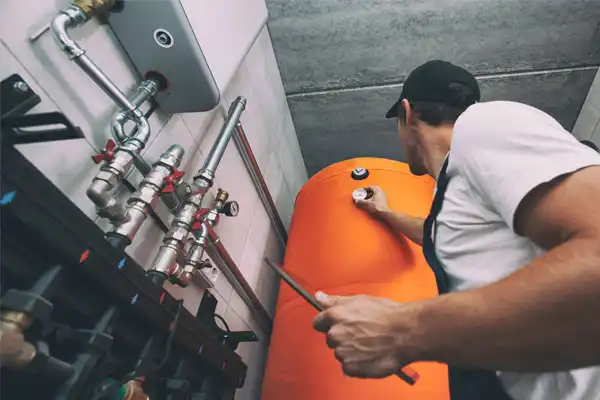
Heating equipment also enters the picture. A Heating contractor or Furnace repair service technician may discover water near mechanical rooms caused by humidifiers, condensate pumps, or venting problems. Gas installation service must be handled separately and safely if appliance relocation or water heater replacement is part of the repair plan. If walls or ceilings are opened for rerouting pipes, a Lighting contractor or Electrician may need to move wiring or fixtures. Good trades coordinate. Bad trades play surprise spaghetti behind drywall.
Drain cleaning, Rooter service, and Hydrojetting are more relevant when the suspected leak involves drain lines rather than pressurized supply lines. A broken sewer line under a slab can cause odors, slow drains, recurring backups, or damp areas. Hydrojetting can clear buildup from solid pipes, but it is not a cure for a collapsed line. Camera inspection matters. Blasting water through a broken drain without understanding the pipe condition is a bit like power-washing a paper bag.
What homeowners should do while waiting for repair
When you suspect a slab leak, speed matters, but so does calm. Running around with towels and dread is understandable. It is not, however, a moisture control plan.
If the leak is active and significant, shut off the main water valve. If the leak appears to be on the hot side, closing the water supply to the water heater may reduce damage while preserving cold water use, but only if you know the valves and system layout. Turn off power or gas to the water heater if required by the manufacturer’s instructions and the situation. When in doubt, ask a professional. Water heaters are useful appliances, not experimental cookware.
Move furniture and rugs away from wet areas. Avoid walking repeatedly on soaked flooring, especially laminate or engineered wood. If water is near electrical outlets, cords, or panels, stay clear and call an Electrician or emergency service as appropriate. Water and electricity remain a terrible couple.
Document what you see. Take photos of wet flooring, meter readings, water bills, damaged trim, and any visible cracks. Insurance coverage varies by policy and cause, so documentation helps. Many policies treat sudden water damage differently from long-term seepage or neglected maintenance. I will not pretend insurance language is fun reading, but it is cheaper to understand it early than argue about it later.
Do not let anyone start demolition without a reason. Access holes may be necessary, but they should follow leak location and repair planning. The goal is not to make the house look like a raccoon gained access to power tools.
The cost question, because everyone is thinking it
Slab leak repair costs vary widely. A simple exposed pipe repair is not the same as locating a leak under imported tile, cutting concrete, rerouting through a finished two-story home, drying water damage, and replacing flooring. Leak detection may be a separate cost. Direct access repairs can range from moderate to expensive depending on surface restoration. Reroutes may cost more in labor and materials but spare finished floors. Whole-home repiping costs more still, but can be the smarter long-term move for failing systems.
The cheapest repair is not always the least expensive outcome. If a direct repair fixes one pinhole in a pipe that is otherwise ready to fail in three more places, the homeowner may pay repeatedly for detection, access, concrete, and flooring. On the other hand, recommending a full repipe for one isolated fitting failure in a newer home may be overkill. Judgment matters.
Here is the practical way to compare options:
- Ask whether the leak is on a hot line, cold line, or drain line, and how that was confirmed.
- Ask what evidence suggests an isolated failure versus system-wide deterioration.
- Compare total disruption, including flooring, drywall, cabinets, and drying, not just the plumbing invoice.
- Discuss code requirements, permits, pressure regulation, and pipe material.
- Consider how long you plan to own the home and whether repeated leaks have already occurred.
A reputable contractor will explain the reasoning, not just the price. If the explanation feels slippery, keep asking. Pipes may be hidden, but the repair logic should not be.
Preventing the next slab leak
Not every slab leak can be prevented. Soil moves, materials age, and construction from decades ago cannot be retroactively supervised. Still, prevention is not hopeless.
Water pressure testing is one of the simplest safeguards. If pressure is too high, repair or install a pressure reducing valve. Expansion tanks may be required or recommended on closed systems, especially with water heaters. These small components reduce stress that otherwise gets absorbed by pipes, fixtures, and appliances.
Water quality testing helps in areas known for aggressive or hard water. Treatment should match the actual problem. A water softener helps with hardness, not every form of corrosion. Filtration, pH correction, or other treatment may be appropriate in specific cases. Guessing at water treatment is like seasoning soup while blindfolded. You might improve it, but you might also ruin dinner.
Pay attention to recurring symptoms. A second slab leak deserves a broader evaluation. So does blue-green staining near copper fixtures, frequent pinhole leaks, banging pipes, or rapid water heater failure. Homes keep records in their own strange way. Stains, sounds, and service history all count.
Routine plumbing inspections can catch problems before they become foundation issues. This is especially true during remodeling. If floors are already open or walls are exposed, inspect nearby piping. Replacing questionable lines during a planned project is usually cheaper than doing it later during an emergency with a sofa balanced in the dining room.
Why professional diagnosis beats heroic DIY
Plenty of homeowners can replace a faucet, clear a trap, or install a showerhead without creating a neighborhood incident. Slab leaks are different. They involve pressurized systems, concrete, structural considerations, leak detection equipment, and often permits. A mistake can damage post-tension cables, electrical conduits, gas lines, flooring, or the pipe you were trying to save.
Professional plumbers also carry experience that does not fit neatly into a tool bag. They know when a sound is traveling along rebar. They know when a hot spot is from a leak rather than a duct. They know when Hydrojetting is useful and when a camera inspection should come first. They know that a line rerouted through an attic needs insulation and thoughtful placement. They know that a repair under a cabinet may require a different plan than one in the middle of a bare garage floor.
The best plumbers are not just pipe fixers. They are risk reducers. They protect the foundation, finishes, water quality, pressure balance, and future serviceability. They also know when to bring in another trade. If a gas water heater must be moved, a qualified Gas installation service matters. If wiring blocks a reroute, call the Electrician. If HVAC condensate is the real culprit, involve an Air conditioning repair technician. Pride is expensive. Coordination is cheaper.
A real-world kind of example
Consider a single-story home from the late 1980s with copper lines under the slab. The homeowner notices a warm tile strip between the hallway bath and the laundry room. The water bill has doubled, and the water heater fires every 20 minutes even at night. Leak detection confirms a hot water line leak under the hallway.
Direct access would require removing discontinued tile through the main walkway. The pipe is copper, and the home has had one prior pinhole leak near the water heater. Pressure is 92 psi, higher than it should be. The plumber offers two realistic options: open the slab and repair the leak, or abandon that underground hot line and reroute overhead with insulated PEX, while also replacing the failed pressure reducing valve.
The direct repair has a lower plumbing cost but creates a flooring problem and leaves the aging hot line under the slab. The reroute costs more on the plumbing side but avoids the tile and reduces future risk for that branch. In this case, the reroute plus pressure correction is probably the better long-term choice. Not because rerouting is always superior, but because the facts lean that way.
Now change the facts. A five-year-old home has a single leak at a poorly made fitting near the edge of the garage, with easy access and no signs of system deterioration. Direct access and repair may be perfectly sensible. Good plumbing decisions are not slogans. They are context with a wrench.
The quiet value of doing it right
Slab leak repair is not glamorous work. Nobody invites friends over to admire a properly abandoned line or a well-regulated water pressure system. There is no ribbon-cutting ceremony for dry soil under a foundation. Still, this is the kind of work that protects everything above it.
Floors stay flat. Walls stay dry. Water heaters stop running overtime. Foundations avoid unnecessary movement. Insurance claims stay smaller or never happen. The homeowner sleeps without listening for phantom hissing at 2 a.m., which is worth more than most people admit.
A slab leak asks for urgency, but it also asks for judgment. Find the leak accurately. Choose the repair that fits the pipe, the house, and the risk. Protect the foundation after the water stops. Look at pressure, water quality, drainage, and the health of the rest of the plumbing system. Bring in the right trades when the problem crosses into HVAC, electrical, gas, heating, or septic territory.
The concrete may hide the pipes, but it does not hide the consequences. Treat a slab leak like the serious foundation threat it can be, and the house has a much better chance of staying boring. In home maintenance, boring is beautiful. Boring means the floor is dry, the meter is still, and the only thing running at midnight is the refrigerator, quietly minding its own business.
Name: Service Lion Plumbing Heating Air Electric
Address: 521 W Briardale Ave, Orange, CA 92865, United States
Phone: (657) 567-7305
Website: https://callservicelion.com/
Email: [email protected]
Hours:
Monday: Open 24 hours
Tuesday: Open 24 hours
Wednesday: Open 24 hours
Thursday: Open 24 hours
Friday: Open 24 hours
Saturday: Open 24 hours
Sunday: Open 24 hours
Open-location code: R48R+WV Orange, California, USA
Map/listing URL:
https://www.google.com/maps/search/?api=1&query=Google&query_place_id=ChIJQU4LBWHV3IARtnABtyykSA4
Google Map:
Socials:
https://www.facebook.com/ServiceLionCA/
https://www.youtube.com/channel/UCR_L35QzsRTxYZtX8PxJvPw
Local Service Information
Service Lion Plumbing Heating Air Electric provides plumbing, drain, heating, air conditioning, and electrical services from its Orange, California location.The company serves homeowners and properties throughout Orange and communities across Orange County and surrounding areas.
Available services include plumbing repairs, water heater work, drain and sewer services, heating and cooling service, electrical repairs, panels, lighting, outlets, and related home-system work.
Service is available for residential properties as well as light commercial needs described within the company's local service-area information.
The company's website emphasizes locally operated service, coordinated home-system support, and practical scheduling for plumbing, HVAC, and electrical needs.
The matching public business listing shows the Orange location as open 24 hours a day, seven days a week.
For service information or scheduling, call (657) 567-7305 or visit https://callservicelion.com/.
The public map listing identifies the business at 521 W Briardale Ave, Orange, CA 92865 and can be used for location and direction information.
Popular Questions About Service Lion Plumbing Heating Air Electric
What services does Service Lion Plumbing Heating Air Electric provide?
The company provides plumbing, drain and sewer, heating, air conditioning, and electrical services. Its published services include plumbing repair, water heaters, drain clearing, sewer work, HVAC repair and installation, electrical repairs, panels, circuit breakers, lighting, outlets, and related services.
Where is Service Lion Plumbing Heating Air Electric located?
The matching business location is 521 W Briardale Ave, Orange, CA 92865, United States.
What areas does Service Lion Plumbing Heating Air Electric serve?
The company serves Orange County and surrounding communities. Its published service-area information includes Orange, Anaheim, Brea, Yorba Linda, Fullerton, Huntington Beach, Newport Beach, Costa Mesa, Irvine, Lake Forest, and additional nearby cities.
Is Service Lion Plumbing Heating Air Electric open 24 hours?
The matching public business listing shows the location as open 24 hours on Monday through Sunday.
Does Service Lion Plumbing Heating Air Electric work on drains and sewer lines?
Yes. Published services include drain clearing, rooter service, camera inspection, hydro jetting, sewer line repair and installation, water line work, slab leak detection, and trenchless sewer line repair.
Does Service Lion Plumbing Heating Air Electric provide heating and air conditioning service?
Yes. Its published HVAC services include air conditioning repair and installation, heating service, furnace work, heat pumps, air ducts, indoor air quality assessments, and thermostat installation.
Does Service Lion Plumbing Heating Air Electric provide electrical service?
Yes. Published electrical services include repairs and installations, electrical panels, circuit breakers, safety inspections, lighting, outlets and switches, surge protection, generators, and EV charging equipment installation.
How can I contact Service Lion Plumbing Heating Air Electric?
Call (657) 567-7305.
Email: [email protected]
Website: https://callservicelion.com/
Facebook: https://www.facebook.com/ServiceLionCA/
Landmarks Near Orange, California
Old Towne Orange Historic District
A central historic district and useful geographic reference point for the Orange community.
Plaza Park
A well-known public gathering point in the center of Old Towne Orange.
Orange Public Library & History Center
A civic landmark serving residents near central Orange.
Hart Park
A major public park and recreation area south of central Orange.
Eisenhower Park
A public park serving neighborhoods in northern Orange.
Santiago Oaks Regional Park
A regional recreation and open-space landmark on the eastern side of Orange.
Irvine Regional Park
A large regional park and recognizable reference point east of the city.
Orange Park Acres
A distinctive residential community and service-area reference point in eastern Orange.
El Modena
An established Orange neighborhood that provides a practical local coverage reference.
Glassell Street
One of the city's principal north-south streets and a useful route through central Orange.
Lincoln Avenue
A major east-west roadway serving northern Orange and nearby communities.
State Route 55
A primary regional freeway connecting Orange with other parts of Orange County.