When to Call an Air Conditioning Contractor for AC Service
There are two kinds of air conditioning problems. The first kind announces itself politely: a little less cool air, a new rattle, a thermostat that seems to be negotiating instead of commanding. The second kind kicks down the door at 5:42 p.m. On the hottest Friday of the year, usually while you are hosting relatives, baking something unnecessary, or both.
The trick is knowing when your AC is having a small sulk and when it needs an air conditioning contractor before the situation turns into a humid indoor camping trip.
An air conditioning contractor is not just “the person with the gauges.” HVAC contractors specialize in installing and maintaining heating, ventilation, and air conditioning equipment. That means their work often includes air conditioning maintenance, air conditioning repair, air conditioning tune-up visits, system replacement, duct-related work, and the plumbing or electrical tasks that connect directly to heating and cooling equipment. Depending on the company, the same trade business may also handle furnace repair service, heat pump installation, water heater installation, plumbing leak repair, drain cleaning, or gas installation service.
That range matters because homes are not tidy little diagrams. They are more like temperamental ecosystems with drywall. Cooling problems can overlap with electrical issues, drainage trouble, airflow restrictions, refrigerant concerns, old equipment, bad installation, or a thermostat that has decided to pursue a career in fiction. Calling the right professional early can save money, protect the equipment, and spare you from standing in front of an open refrigerator like a raccoon in gym shorts.
The moment your AC stops cooling, do not start with wishful thinking
A working air conditioner should do something fairly simple: move heat from inside your home to outside. When it stops doing that, the reason may be obvious, but often it is not. A clogged filter can choke airflow. A failed component can keep the outdoor unit from running. Incorrect refrigerant charge can reduce performance and increase failure risk. Poor installation, wrong sizing, or a system that has aged past its cheerful years can all produce similar symptoms from the homeowner’s point of view: the house feels warm, the unit runs too long, and everyone starts blaming the thermostat.
If your AC runs constantly but the rooms never reach the set temperature, that is a good time to call an air conditioning repair service. Constant operation is not a badge of dedication. It is a symptom. The system may be undersized, poorly charged, dirty, restricted, or simply struggling with a problem that will not fix itself through moral support.
A common homeowner delay goes like this: “Let’s see what it does tomorrow.” Sometimes that is reasonable. If someone left a door open, if the filter looks like it was used to strain soup, or if the thermostat was accidentally set to heat by a curious child or an adult who should know better, a simple correction may solve the issue. But if the equipment keeps running and the home stays uncomfortable, waiting usually just gives the problem a better wardrobe.
Warm air from the vents is your AC waving a small white flag
Warm air blowing from the vents is one of the clearest signs that you need AC service. It does not always mean a catastrophic failure, but it does mean the cooling process is not doing its job.
Before calling, it is fair to check the basics. Make sure the thermostat is set to cooling. Check whether the indoor blower is running. Look at the air filter. Confirm that the outdoor unit has power and is not buried under leaves, grass clippings, or the remains of last autumn’s ambitious landscaping plan. If those basics look normal and the system still blows warm air, bring in a professional.
An air conditioning contractor can check the equipment in a way that goes beyond “yep, still hot.” They can evaluate airflow, inspect components, assess system operation, and service the equipment safely. Air conditioners are also regulated refrigeration appliances, and technicians involved in maintenance, service, or repair are part of that professional service world for a reason. Refrigerant work is not a weekend hobby unless your weekend hobbies include federal compliance and expensive mistakes.
This is especially important with heat pumps. A heat pump handles both heating and cooling, so a cooling complaint may connect to controls, refrigerant charge, reversing operation, installation quality, or other equipment-specific issues. If you are considering heat pump installation or already rely on one, proper setup and service are not luxuries. Correct equipment sizing and proper refrigerant charging matter for energy use and long-term reliability.
Strange noises deserve respect, even the ridiculous ones
Air conditioners make noise. A normal system hums, clicks at startup or shutdown, and moves air with a steady whoosh. But grinding, screeching, banging, rattling, buzzing, or rapid clicking should get your attention.
I have heard homeowners describe sounds with impressive creativity. “Like a shopping cart full of forks.” “Like a helicopter landing in a dishwasher.” “Like the house is clearing its throat.” None of these belong on a maintenance checklist.
Noise can point to loose parts, failing motors, electrical trouble, debris, airflow problems, or mechanical wear. Some sounds are minor if caught early. A loose panel can be tightened. Debris can Plumber be removed. A worn part can be replaced before it damages something more expensive. But if you ignore a bad sound long enough, the system may respond by converting a repair into a replacement discussion. Equipment has a flair for drama when neglected.
If the noise is paired with burning smells, loss of cooling, flickering power, or the outdoor unit failing to start correctly, stop running the system and call for service. There is a place for curiosity in homeownership. Listening to a dying condenser fan while saying, “Let’s give it one more hour,” is not that place.
When the breaker trips, call before you keep resetting it
A tripped breaker can happen once. If it happens repeatedly, the AC is not “being annoying.” It is asking for professional help in the only language a breaker speaks.
Air conditioning equipment uses electrical components, and some HVAC companies work closely with electrical systems directly related to heating and cooling equipment. In other cases, an electrician may be needed, especially if the issue extends beyond the AC equipment itself into panels, circuits, wiring, or broader household electrical concerns. A good contractor knows where that line is. A bad plan is repeatedly resetting the breaker and hoping the house appreciates your optimism.
Repeated trips can signal an electrical fault, a component drawing too much current, installation problems, or other unsafe conditions. It is not a situation to nurse along. Electricity is wonderfully useful and deeply uninterested in your weekend plans.
The same judgment applies if lights dim when the AC starts, if you smell something electrical, or if the outdoor unit buzzes but does not run. A lighting contractor may be the right professional for lighting-specific work, and an electrician may be needed for general electrical issues, but an air conditioning contractor is the right first call when the symptom appears tied directly to AC operation.
Moisture around the system is not always “just condensation”
Air conditioners remove moisture from indoor air as part of cooling. That water has to go somewhere. Usually it drains away through the condensate system. When water appears where it should not, the cause may be simple, but the consequences can be aggravating.
A clogged condensate drain can cause water to back up. A drain pan can overflow. Poor installation can create drainage issues. In some homes, AC drainage problems show up near plumbing, crawl spaces, or utility areas, which is where the boundaries between HVAC and plumbing start shaking hands. Businesses that handle both HVAC and plumbing may be able to address related issues more smoothly, particularly when plumbing leak repair, drain cleaning, rooter service, or even hydrojetting is needed elsewhere in the home.
Do not ignore water near air conditioning equipment. Water can damage finishes, encourage mold growth, affect nearby materials, and create electrical concerns if it reaches places it should not. The repair may be straightforward, but the cleanup from waiting can become a long, damp little opera.
If the moisture appears to be from plumbing rather than the AC, call a plumber. If it appears when the AC runs or collects near the indoor cooling equipment, call an air conditioning contractor. If you are unsure, describe the timing, location, and amount of water when you call. “It leaks only when cooling runs” is useful information. “There is a puddle and vibes are bad” is less technical, but still better than silence.
Short cycling is hard on equipment and patience
Short cycling means the system starts, runs briefly, shuts off, then starts again soon after. It is the HVAC version of pacing around the kitchen opening the fridge every eight minutes. Nothing good comes from it.
Short cycling can happen for several reasons, including incorrect equipment sizing, airflow trouble, thermostat problems, refrigerant issues, or component faults. Proper HVAC installation includes correct equipment sizing, and that detail matters more than many homeowners realize. Bigger is not automatically better. An oversized air conditioner may cool quickly without removing enough humidity, then shut off and restart frequently. The house feels clammy, the equipment works harder than it should, and the homeowner gets to pay for the privilege.
A technician can evaluate whether the system is short cycling because of a serviceable fault or because the installation itself is mismatched. That distinction matters. A small repair might solve one case. Another case might need a deeper conversation about system design, replacement, or duct and airflow conditions.
Short cycling should not be treated as a quirky personality trait. It increases wear and can shorten equipment life. Call before it becomes the soundtrack of your summer.
Your energy bill is trying to gossip
Utility bills are not perfect diagnostic tools, but they do tell stories. If your cooling costs jump sharply without a change in weather, usage, or rates, your AC may be working harder than it should.
Dirty coils, restricted airflow, failing parts, low or improper refrigerant charge, duct issues, or poor installation can all force longer run times. So can neglect. Air conditioning maintenance is not glamorous, but neither is paying extra every month because your system is dragging itself through the season like a tired parade float.
An air conditioning tune-up can help spot problems before they become breakdowns. During routine service, a contractor can inspect system operation, clean or service appropriate components, check airflow and controls, and verify whether the system is operating as it should. The exact work depends on the equipment and service agreement, but the goal is the same: keep the system reliable, efficient, and less likely to betray you during a heat wave.
A higher bill alone may not prove the AC is guilty. Water heater repair needs, changes in household occupancy, old appliances, or electrical issues can also affect costs. But if the AC runs longer, cools worse, and costs more, the evidence is no longer circumstantial. The unit is standing over the body with a wrench.
When maintenance is smarter than repair
The best time to call an air conditioning contractor is often before anything breaks. This is not the most exciting advice, which is why it is also the most frequently ignored.
Air conditioning maintenance is preventive. It catches small issues, cleans up seasonal wear, checks operation, and helps the system enter heavy-use months with fewer surprises. A tune-up will not make a 25-year-old system young again, just as a haircut will not make a raccoon into a show dog. But maintenance can improve reliability and reveal when replacement planning makes more sense than emergency repair.
A practical rhythm for many homes is annual cooling service before the hottest stretch of the year. Homes with heavy use, pets, dusty conditions, or older systems may benefit from closer attention. The filter may need changing more often than the tune-up schedule, especially if it loads quickly. A filter is not expensive, but a system suffocating behind one can become very expensive indeed.
Here is the one short homeowner checklist worth taping inside your brain before you call:
- Check the thermostat setting and batteries if applicable.
- Look at the air filter and replace it if it is dirty.
- Confirm vents are open and not blocked by furniture, rugs, or heroic piles of laundry.
- Make sure the outdoor unit is clear of obvious debris.
- Note the symptoms, including noises, smells, water, breaker trips, and when the problem occurs.
That is enough. You are not expected to become a refrigeration technician between lunch and dinner. The goal is to rule out simple issues and give the contractor useful details.
Repair or replace is not a moral decision
Homeowners often treat the repair-or-replace question like a test of character. “Can we squeeze one more year out of it?” Maybe. “Should we?” Different question.
Air conditioning repair makes sense when the equipment is generally sound, the problem is isolated, and the cost is reasonable compared with the system’s age and condition. Replacement starts to look more sensible when failures repeat, comfort remains poor after repairs, parts become difficult or costly, or the system was never correctly sized or installed in the first place.
A qualified air conditioning contractor should be able to discuss options without turning your living room into a timeshare presentation. They should explain what failed, what the repair would accomplish, what it would not solve, and whether other issues are likely. If replacement is on the table, sizing and refrigerant charging matter. Proper installation is not just “put the new box where the old box was and heat pump contractor hope the laws of physics are feeling generous.”
This is where HVAC expertise overlaps with broader home systems. A heating contractor may discuss furnace repair service or heating equipment replacement if the home uses a combined system. Heat pump installation may be a better fit for some homes than replacing separate heating and cooling equipment, depending on the building and local conditions. If gas equipment is involved, gas installation service must be handled properly. If electrical capacity or wiring is part of the upgrade, an electrician may need to participate.
A good contractor will not pretend every trade is the same. Plumbing, heating, and air conditioning are commonly grouped as specialty trade work, while electrical work is its own separate field. Many service companies coordinate across these needs, but coordination is different from guesswork wearing a tool belt.
The thermostat is not always the villain, but it is often an accomplice
Thermostats get blamed for everything. Sometimes they deserve it. Other times they are innocent little wall rectangles surrounded by bad information.
If the thermostat is poorly located, near sunlight, drafts, appliances, or exterior doors, it may read the room inaccurately. If it has wiring issues or control problems, it may fail to communicate correctly with the system. If the schedule is programmed badly, the AC may run at odd times or fight against your actual comfort needs.
Still, when the system fails to cool, do not assume a new thermostat will fix it. A thermostat can call for cooling, but it cannot repair refrigerant charge, clean coils, fix airflow, or revive a failed component through encouragement. Replacing it without diagnosis can become the HVAC equivalent of buying new shoes because your car has a flat tire.
Call for AC service when thermostat adjustments do not produce normal cooling, when the system ignores commands, or when operation seems inconsistent. The contractor can determine whether the control is the issue or merely the messenger.
Smells are messages, and some are rude
A musty smell when the AC starts may point to moisture or dirty components. A burning smell may suggest an electrical or mechanical issue. A chemical-like odor can be more concerning and should not be ignored.
Turn the system off if the smell is sharp, burning, or unusual enough to make you hesitate. Then call. Describe the odor plainly. Technicians have heard every version, from “hot plastic” to “old basement wearing cologne.” Specific timing helps too. Does it happen only at startup? After long run times? Near the indoor unit? From every vent?
Smells can originate in ductwork, condensate drainage, filters, equipment components, or nearby systems. In homes with plumbing issues, sewer-like odors may require a plumber or septic system service rather than AC repair. That distinction matters. If every drain in the house is misbehaving, the air conditioner is probably not the mastermind. Drain cleaning or rooter service may be needed. If the odor appears only when air moves through the vents, HVAC inspection makes sense.
After renovation, replacement, or “my cousin helped,” schedule service
Homes change. Walls move, insulation gets added, windows get replaced, rooms get finished, and somebody decides the garage should become a yoga studio, office, or place to store seventeen bins labeled “misc.” These changes can affect heating and cooling loads and airflow.
If you recently remodeled and the AC no longer performs well, call an air conditioning contractor. The equipment may not match the new conditions. Duct runs may have been altered or blocked. Return air may be inadequate. A system that worked acceptably before might now struggle because the house it serves is not the same house.
The same applies after equipment installation. A new system should cool reliably, but installation quality matters. Correct sizing and proper refrigerant charging influence energy consumption and failure risk. If a newly installed system cannot maintain comfort, cycles oddly, or leaves the house humid, ask for evaluation promptly. New equipment should not require a daily pep talk.
And yes, sometimes the problem follows amateur work. Homeowners are resourceful, and resourcefulness is admirable until it meets refrigerant, high voltage, gas piping, or condensate drainage. If someone “helped” and the system now behaves like a haunted appliance, call a professional and be honest about what was touched. Technicians are not there to judge. They are there to find the problem, though they may raise one eyebrow. That is allowed.
What an air conditioning contractor can do that a quick online search cannot
A search engine can give you possibilities. A contractor can test the system in front of them. That difference is everything.
Professional AC service combines observation, measurement, equipment knowledge, safety practices, and trade experience. Contractors who install, maintain, and service HVAC systems understand how cooling equipment interacts with ventilation, heating, controls, ducts, refrigerant circuits, condensate drainage, and related plumbing or electrical connections. That is why one symptom can have several possible causes, and why a confident diagnosis after twelve seconds on the internet should be handled with tongs.
The useful question is not “What could it be?” The useful question is “What is it in this specific system, under these specific conditions?” That takes testing.
A homeowner may see ice on a line and assume the system needs refrigerant. It might. It might also have airflow restrictions or other issues. A homeowner may hear buzzing and assume the outdoor unit is dead. Maybe it is a failed component, maybe a control issue, maybe an electrical concern. Guessing gets expensive fast.
When other trades may need to join the party
Because HVAC equipment sits at the crossroads of comfort, power, water, drainage, and sometimes gas, AC service can overlap with other specialties. The air conditioning contractor may handle some related work directly, or they may recommend another licensed trade depending on the issue and local rules.
If the issue involves general household wiring, panel upgrades, or lighting problems, an electrician or lighting contractor may be the appropriate professional. If water is coming from supply piping, fixtures, or drains rather than the AC, a plumber is the better call. If a cooling upgrade is happening alongside water heater installation, water heater repair, water softener installation, or plumbing repiping, coordination can prevent one project from tripping over another. If sewer lines or septic components are involved, septic system service, rooter service, hydrojetting, or drain cleaning may enter the conversation.
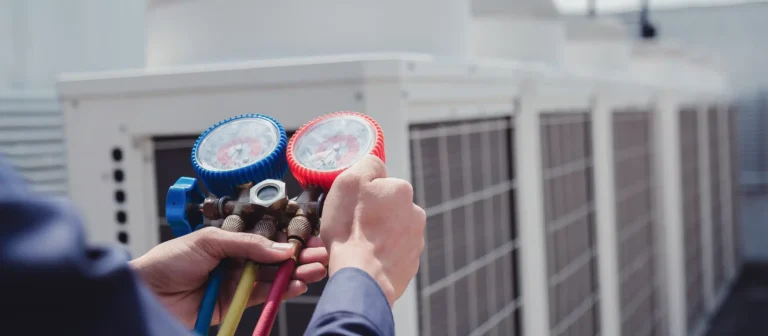
The point is not to turn one AC call into a parade of vans. The point is to respect the boundaries of the work. Good contractors do that. They know when a problem is theirs, when it is adjacent, and when another trade needs to step in before everyone starts inventing solutions with pipe tape and optimism.
Here is a concise guide to who usually makes sense for common symptoms:
- Call an air conditioning contractor for poor cooling, short cycling, AC noises, refrigerant-related concerns, tune-ups, and system replacement.
- Call an electrician for broader electrical faults, panel concerns, repeated circuit issues not isolated to the equipment, or unsafe wiring symptoms.
- Call a plumber for supply leaks, fixture leaks, water heater repair, drain backups, and plumbing repiping.
- Call a heating contractor for furnace repair service, heating performance issues, or combined HVAC system concerns.
- Call septic system service when odors, backups, or drainage problems point beyond indoor plumbing and toward the septic system.
The best call is the one made before the ceiling fan becomes a survival strategy
A struggling air conditioner rarely improves because it feels appreciated. It needs maintenance, repair, correct installation, or, at some point, replacement. Calling an air conditioning contractor early gives you better choices. You can schedule instead of panic. You can compare repair and replacement with a clear head. You can fix a drainage issue before it stains drywall. You can catch a failing part before it turns the entire system into a very large paperweight.
There is also comfort to consider, and comfort is not frivolous. Good cooling helps a home feel livable. It controls humidity, supports sleep, and keeps the indoor environment from becoming a sweaty group project. When AC service is delayed too long, the repair often happens under pressure, and pressure has a way of making every option more expensive and less pleasant.
Call when the system blows warm air. Call when noises change. Call when breakers trip, water appears, smells develop, cooling weakens, or bills rise without explanation. Call for air conditioning maintenance before peak season, not after the first heat wave has every contractor’s phone glowing like a slot machine.
And when you do call, give clear symptoms. Tell them what you checked, what changed, when it started, and whether the system has been serviced recently. You do not need technical vocabulary. “The outdoor unit hums, the indoor fan runs, and the air is warm” is better than “It’s broken.” “Water appears only after the AC runs for an hour” is better than “The house is cursed,” though both may feel emotionally accurate.
A good air conditioning repair service will translate your observations into a proper diagnosis. They will understand the equipment, the safety concerns, the installation factors, and the related systems that may be involved. That is the value of calling the right contractor at the right time.
Your AC does not need constant attention. It is not a toddler with a compressor. But it does need timely service, sensible maintenance, and professional care when the warning signs appear. Treat those signs seriously, and your cooling system has a much better chance of doing its job quietly, efficiently, and without turning your living room into a sauna with throw pillows.
Name: Service Lion Plumbing Heating Air Electric
Address: 521 W Briardale Ave, Orange, CA 92865, United States
Phone: (657) 567-7305
Website: https://callservicelion.com/
Email: [email protected]
Hours:
Monday: Open 24 hours
Tuesday: Open 24 hours
Wednesday: Open 24 hours
Thursday: Open 24 hours
Friday: Open 24 hours
Saturday: Open 24 hours
Sunday: Open 24 hours
Open-location code: R48R+WV Orange, California, USA
Map/listing URL:
https://www.google.com/maps/search/?api=1&query=Google&query_place_id=ChIJQU4LBWHV3IARtnABtyykSA4
Google Map:
Socials:
https://www.facebook.com/ServiceLionCA/
https://www.youtube.com/channel/UCR_L35QzsRTxYZtX8PxJvPw
Local Service Information
Service Lion Plumbing Heating Air Electric provides plumbing, drain, heating, air conditioning, and electrical services from its Orange, California location.The company serves homeowners and properties throughout Orange and communities across Orange County and surrounding areas.
Available services include plumbing repairs, water heater work, drain and sewer services, heating and cooling service, electrical repairs, panels, lighting, outlets, and related home-system work.
Service is available for residential properties as well as light commercial needs described within the company's local service-area information.
The company's website emphasizes locally operated service, coordinated home-system support, and practical scheduling for plumbing, HVAC, and electrical needs.
The matching public business listing shows the Orange location as open 24 hours a day, seven days a week.
For service information or scheduling, call (657) 567-7305 or visit https://callservicelion.com/.
The public map listing identifies the business at 521 W Briardale Ave, Orange, CA 92865 and can be used for location and direction information.
Popular Questions About Service Lion Plumbing Heating Air Electric
What services does Service Lion Plumbing Heating Air Electric provide?
The company provides plumbing, drain and sewer, heating, air conditioning, and electrical services. Its published services include plumbing repair, water heaters, drain clearing, sewer work, HVAC repair and installation, electrical repairs, panels, circuit breakers, lighting, outlets, and related services.
Where is Service Lion Plumbing Heating Air Electric located?
The matching business location is 521 W Briardale Ave, Orange, CA 92865, United States.
What areas does Service Lion Plumbing Heating Air Electric serve?
The company serves Orange County and surrounding communities. Its published service-area information includes Orange, Anaheim, Brea, Yorba Linda, Fullerton, Huntington Beach, Newport Beach, Costa Mesa, Irvine, Lake Forest, and additional nearby cities.
Is Service Lion Plumbing Heating Air Electric open 24 hours?
The matching public business listing shows the location as open 24 hours on Monday through Sunday.
Does Service Lion Plumbing Heating Air Electric work on drains and sewer lines?
Yes. Published services include drain clearing, rooter service, camera inspection, hydro jetting, sewer line repair and installation, water line work, slab leak detection, and trenchless sewer line repair.
Does Service Lion Plumbing Heating Air Electric provide heating and air conditioning service?
Yes. Its published HVAC services include air conditioning repair and installation, heating service, furnace work, heat pumps, air ducts, indoor air quality assessments, and thermostat installation.
Does Service Lion Plumbing Heating Air Electric provide electrical service?
Yes. Published electrical services include repairs and installations, electrical panels, circuit breakers, safety inspections, lighting, outlets and switches, surge protection, generators, and EV charging equipment installation.
How can I contact Service Lion Plumbing Heating Air Electric?
Call (657) 567-7305.
Email: [email protected]
Website: https://callservicelion.com/
Facebook: https://www.facebook.com/ServiceLionCA/
Landmarks Near Orange, California
Old Towne Orange Historic District
A central historic district and useful geographic reference point for the Orange community.
Plaza Park
A well-known public gathering point in the center of Old Towne Orange.
Orange Public Library & History Center
A civic landmark serving residents near central Orange.
Hart Park
A major public park and recreation area south of central Orange.
Eisenhower Park
A public park serving neighborhoods in northern Orange.
Santiago Oaks Regional Park
A regional recreation and open-space landmark on the eastern side of Orange.
Irvine Regional Park
A large regional park and recognizable reference point east of the city.
Orange Park Acres
A distinctive residential community and service-area reference point in eastern Orange.
El Modena
An established Orange neighborhood that provides a practical local coverage reference.
Glassell Street
One of the city's principal north-south streets and a useful route through central Orange.
Lincoln Avenue
A major east-west roadway serving northern Orange and nearby communities.
State Route 55
A primary regional freeway connecting Orange with other parts of Orange County.